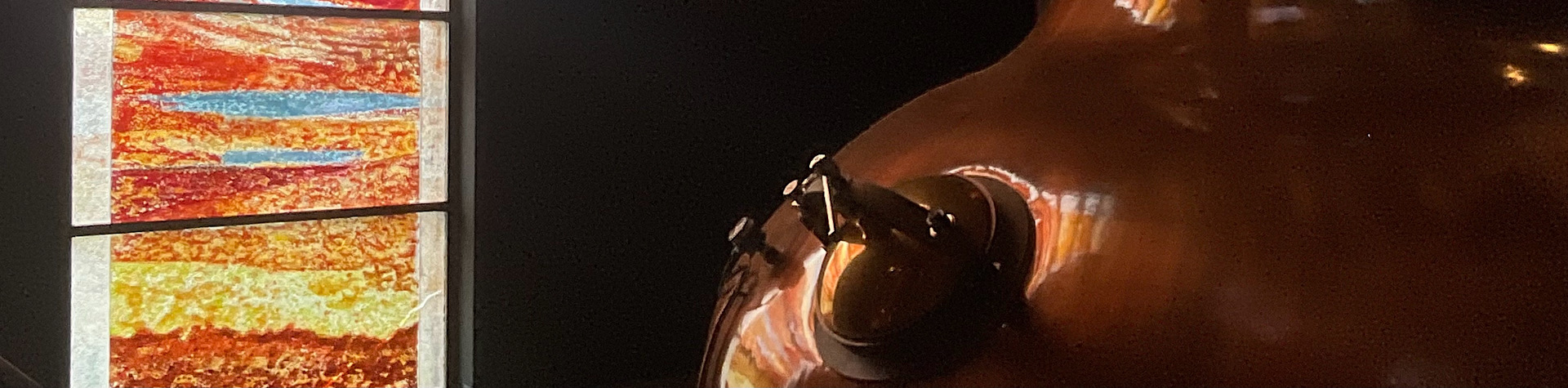
Dalmore Stillhouse Window
Alness, Scotland • 10-metre fused Bullseye glass artwork
The Still House at Dalmore Distillery presented a rare architectural opportunity — a towering south-facing wall flooded with the dynamic light of the Scottish Highlands, overlooking the Cromarty Firth.
Commissioned by The Dalmore and developed in close collaboration with Threesixty Architects of Glasgow, this monumental fused glass window spans ten metres from floor to ceiling. It now serves as the dramatic visual centrepiece of one of Scotland’s most ambitious distillery projects.
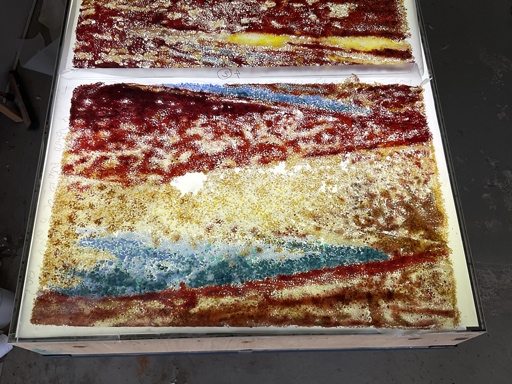
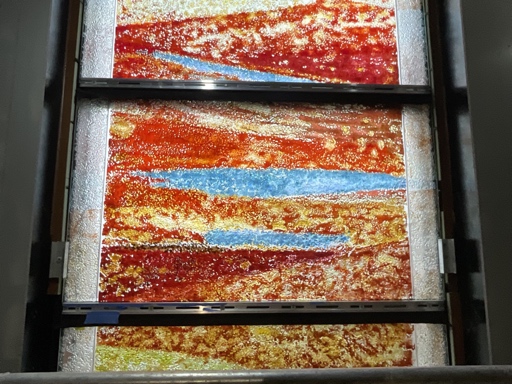
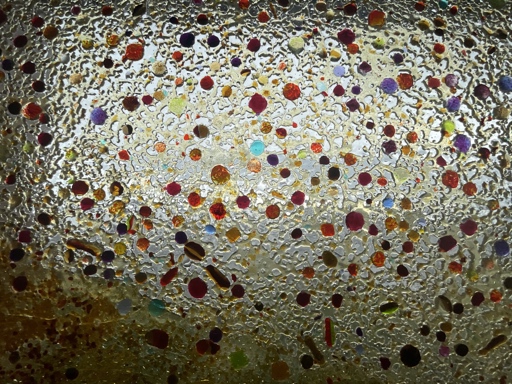
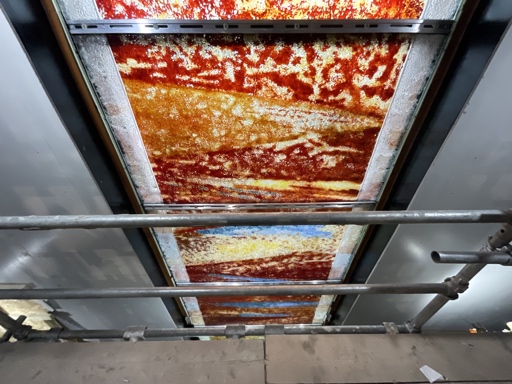
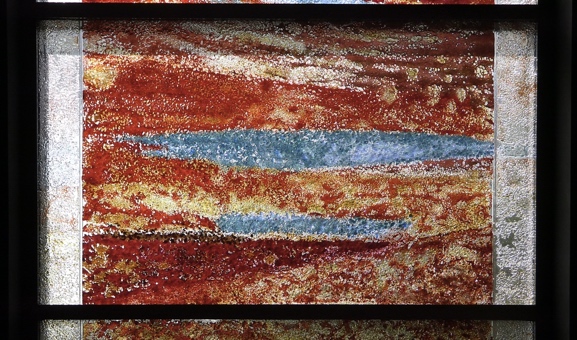
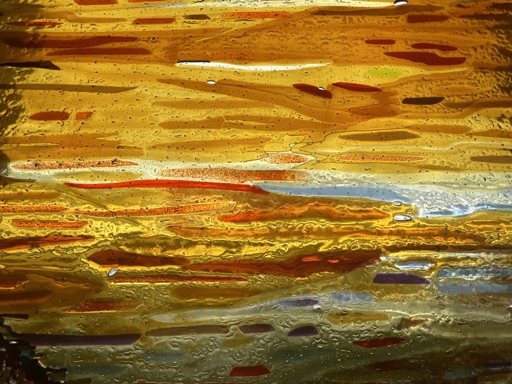
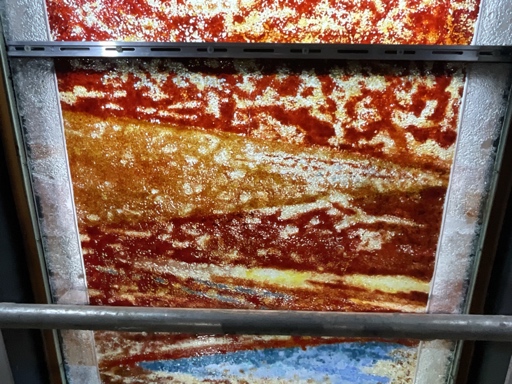
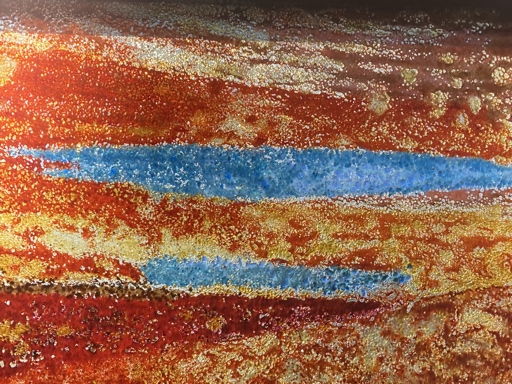
Entirely abstract yet deeply narrative, the artwork traces the complete journey of whisky — from the terroir of the earth, through barley and distillation, to maturation and the ethereal “angel’s share”. Created using crushed Bullseye glass frit fused onto sheet glass, the surface contains thousands of tiny lenses that interact with light, creating constantly shifting effects throughout the day.
This is not mere decoration. It is a site-specific artwork designed for this building, this light, and this story — intended to remain an essential part of the Dalmore experience for generations.
This is almost certainly the largest and most ambitious new art glass window created for a building in Scotland for many years.
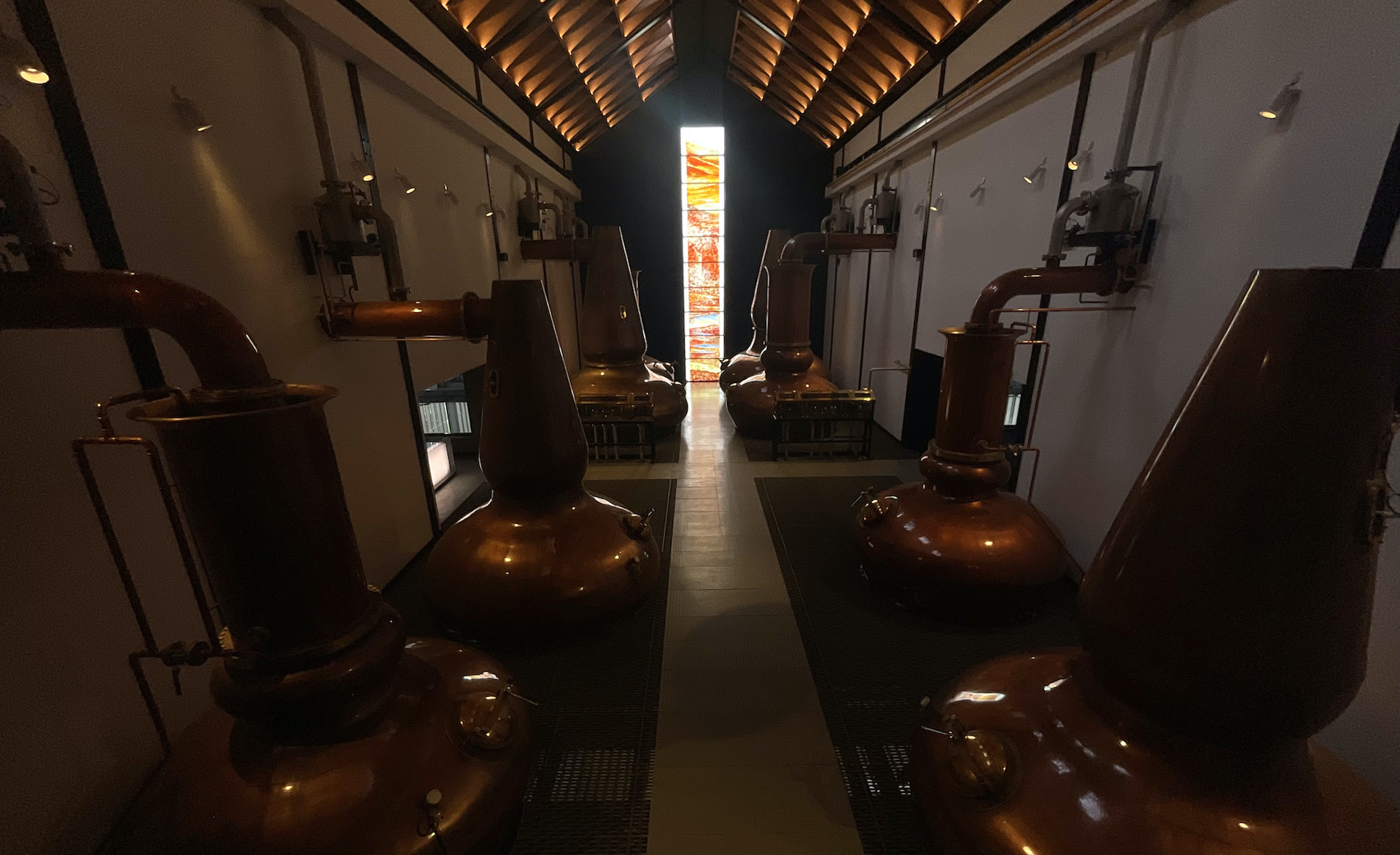
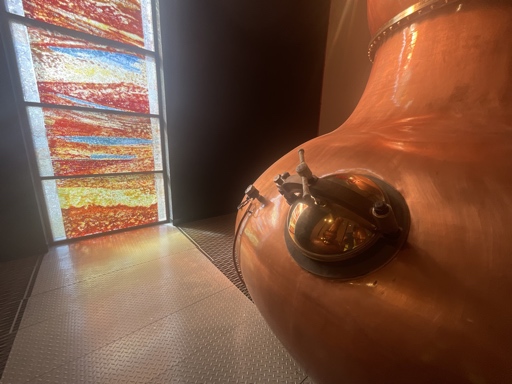
The Still House, Dalmore Distillery, Alness — the window at the end of the nave of stills
Dalmore Still House Window
Alness, Scotland • 2026
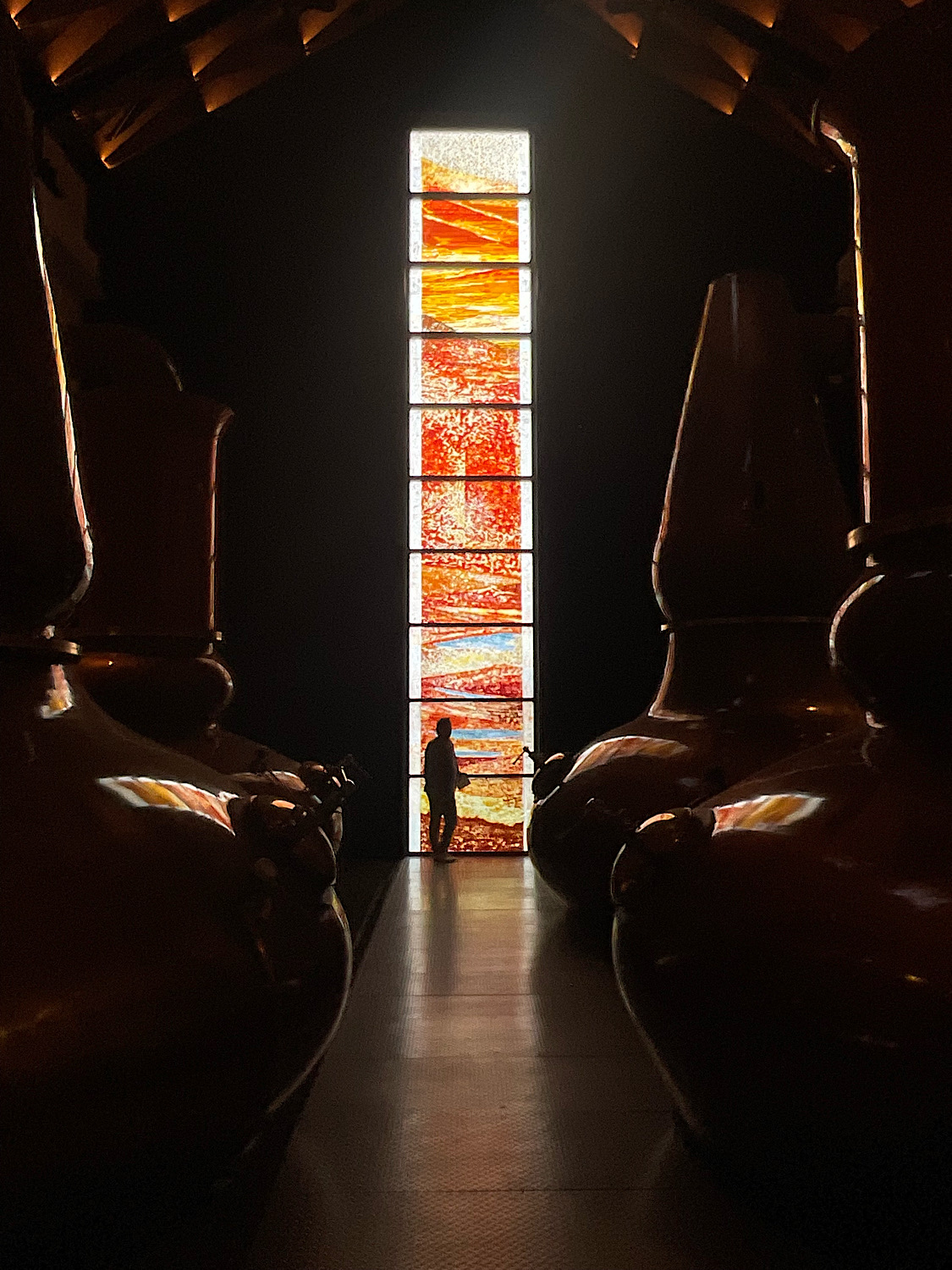
This is the most important window I have made in Europe for over ten years.
It is something totally unique and special. For this project I pushed the limits of the material using Bullseye Glass.
The Still House at Dalmore Distillery presented a rare opportunity — a south-facing wall flooded with the ever-changing Highland light, overlooking the Cromarty Firth.
Commissioned by Dalmore and developed with Threesixty Architects, this ten-metre fused glass artwork forms the visual centrepiece of the new distillery development.
The work traces the journey of whisky from earth to glass — abstract yet deeply narrative, responding beautifully to light throughout the day.
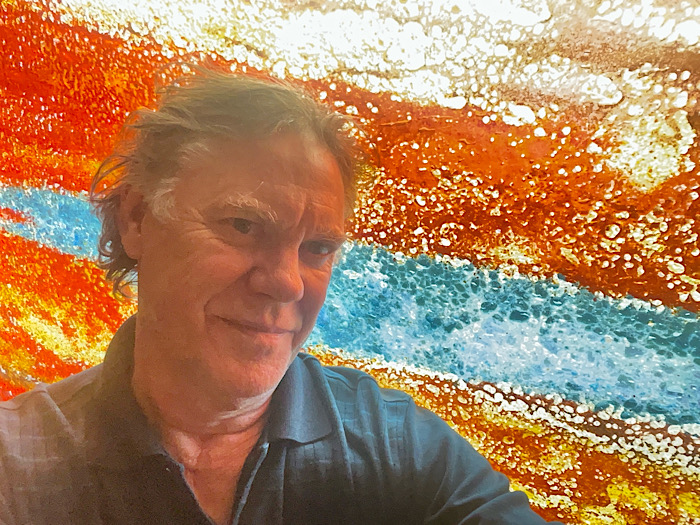
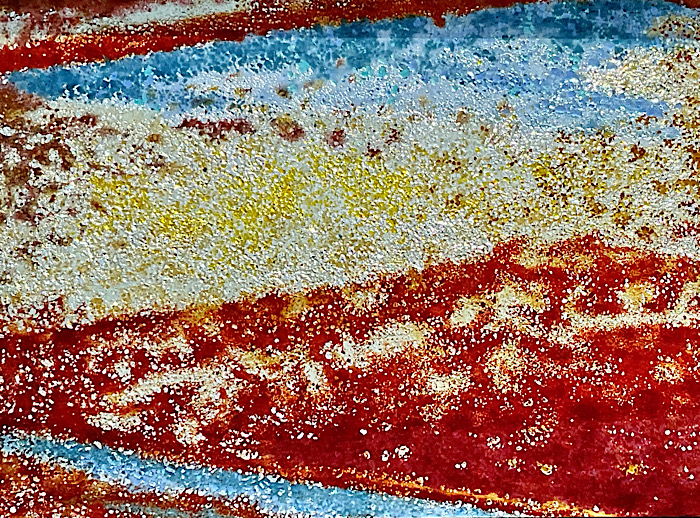
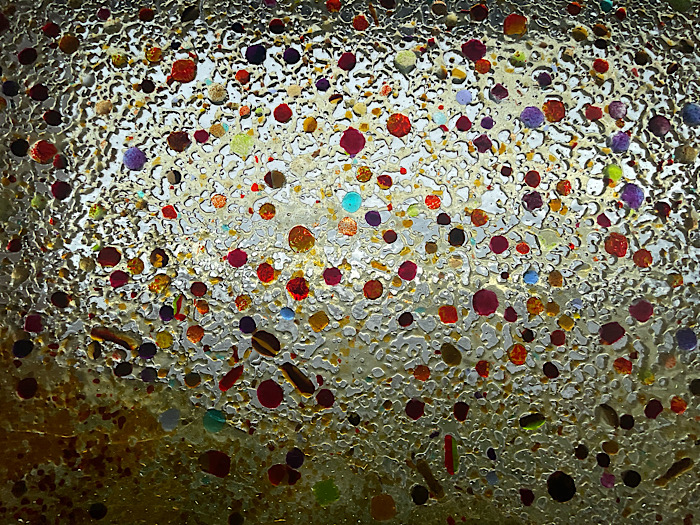
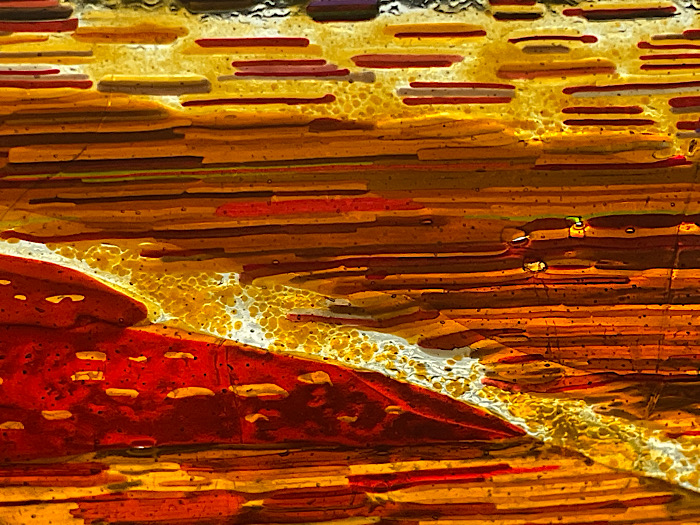

Luceo non uro — I shine, not burn
The motto of The Dalmore, and the spirit of this window.
Art glass can bring a special quality to a building. Done with sensitivity to its location, it creates something magical — a sacred space. For an artist, to be trusted with a commission like this is a privilege that depends on three things: an architect who designs the building creating the opening and believes in what might fill it, a client with the vision to see the design concept and have the foresight to commission the work, and a building with something to say.
The architects are Threesixty Architecture in Glasgow — creative, generous collaborators — and the client is Dalmore, whose own vision for this building was as ambitious as anything an artist could hope to answer. It is a particular joy to have made this work for a building in Scotland.
In most art forms it is difficult to find something genuinely new — a territory still unexplored. In the medium of art glass this remains possible. It can come about when methods or materials that are new, or previously underused, are brought into creative examination. What I am exploring in this work is glass fusing — the melting together of glass elements into something unified and irreversible. This requires a glass made specifically for the purpose, and Bullseye Glass is exactly that. This window explores some of the deepest potential of this material and the possibilities it offers.
Although the work is entirely abstract, as the design developed I began to see glimpses of landscape and of the whisky-making process emerging within it. The window now reads from the bottom upward as a journey.
At the base, a feeling of earth — the terroir — laced with glass pebbles. Above this, the germination and growth of barley in the soil, and the pure water from the source, and a sense of the penetrating sunlight. The energy of the mash, and then the dynamic heart of distillation — conceived at the centre of the window as a visualisation of the process within the stills themselves. Moving higher, the spirit developing through years of maturation: beginning pale, growing richer and deeper in colour as it rises. At the very top, rounded glass jewels suggest the scents and flavours of Dalmore, set in a pale amber glass lace that implies the slow evaporation of the angel’s share. The side borders carry the presence of water throughout.
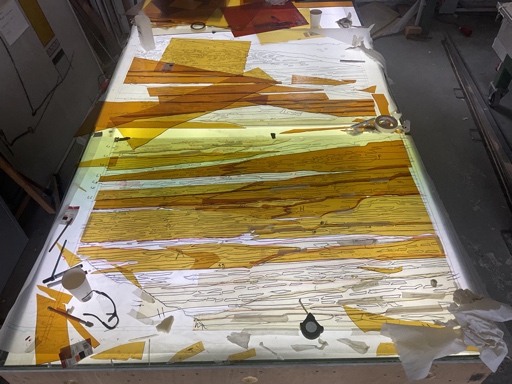
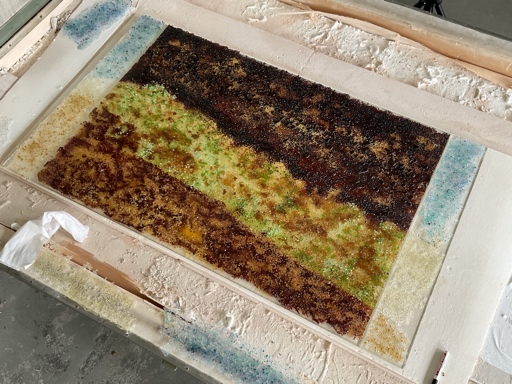
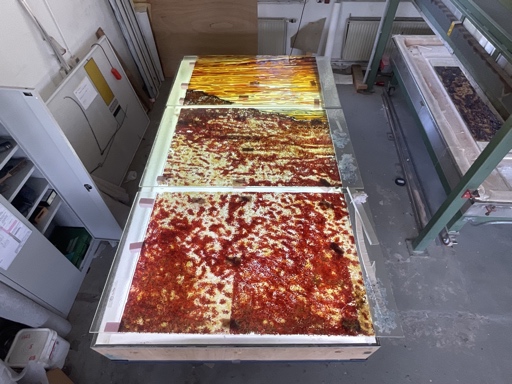
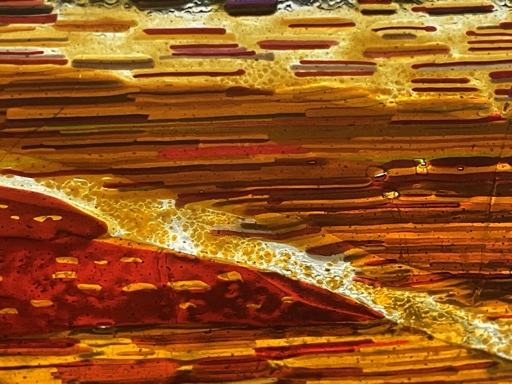
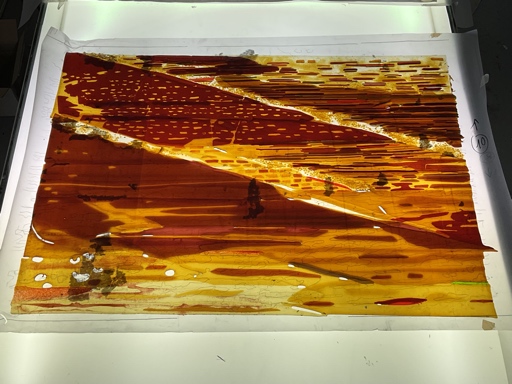
The window is made entirely of Bullseye Glass — a glass conceived specifically for fusing, for melting together. The lower areas use a lace-like structure of crushed Bullseye Glass in differing grades; the upper areas are cut sheet glass. All of it fused into ten individual panels, each one irreversible, each one unique.
The architect noted that you can stand at the far end of the still house and receive the window as light and colour and composition — and then walk the full length of the building and lay your hands on the lower sections, feeling the texture and relief of the glass directly. Few works of art at this scale extend that invitation.
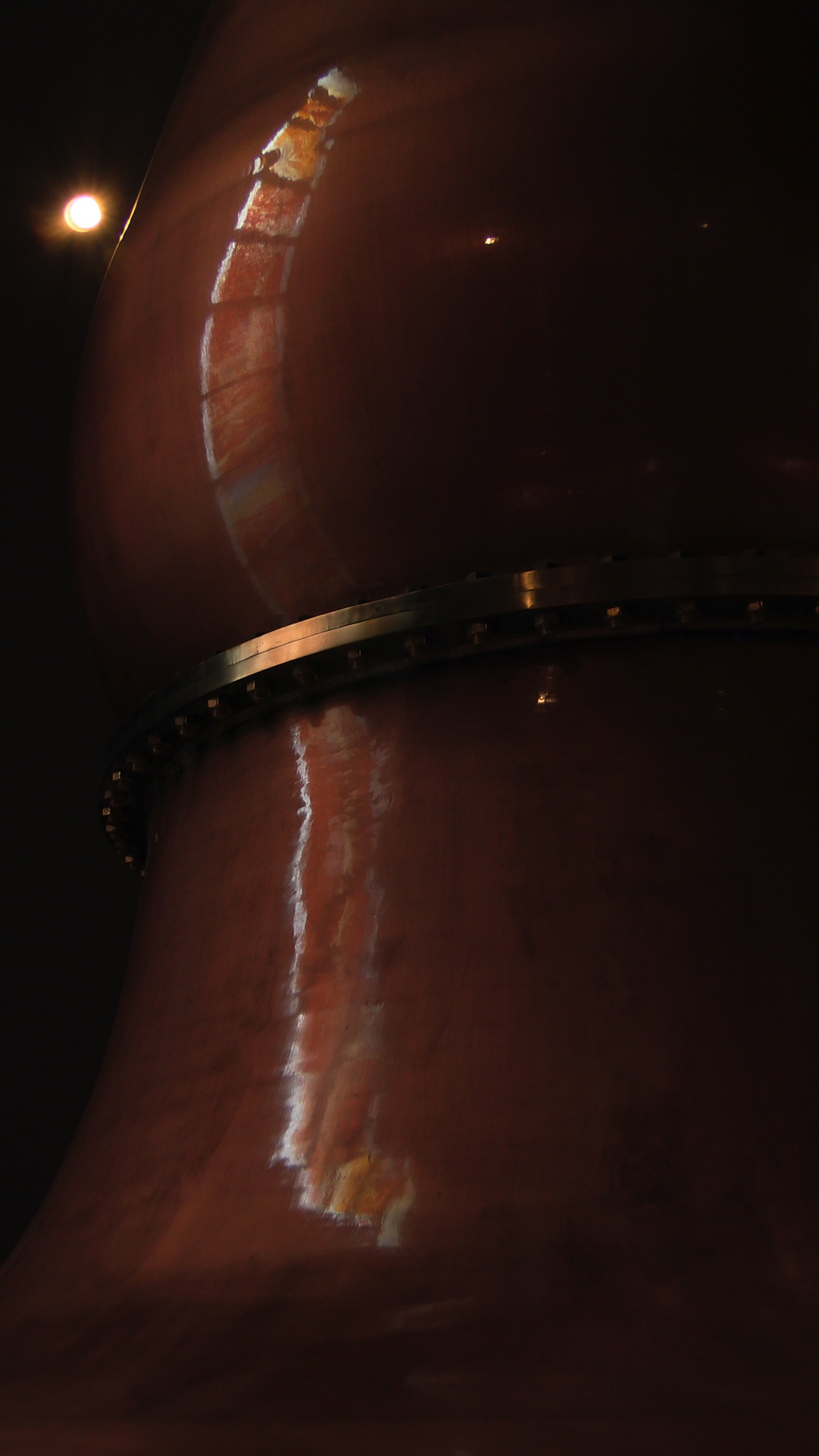
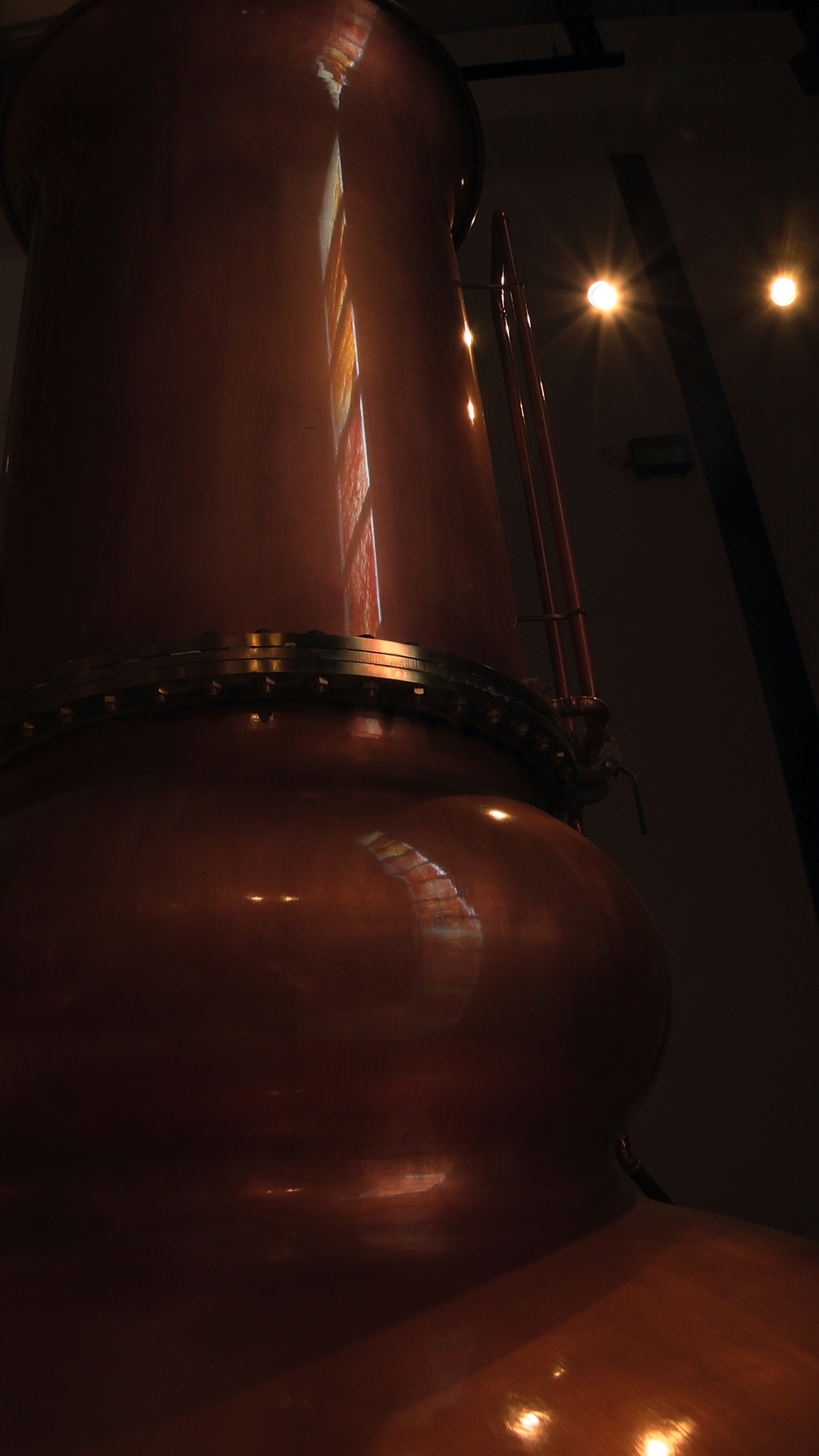
The window also lives beyond its own frame. Its colours reflect in the copper stills and distort across their curved surfaces. It moves in the metal floor. It shifts as the light changes through the day. One window, but the room holds countless versions of it.
This window was made to be exactly that.
Reflections
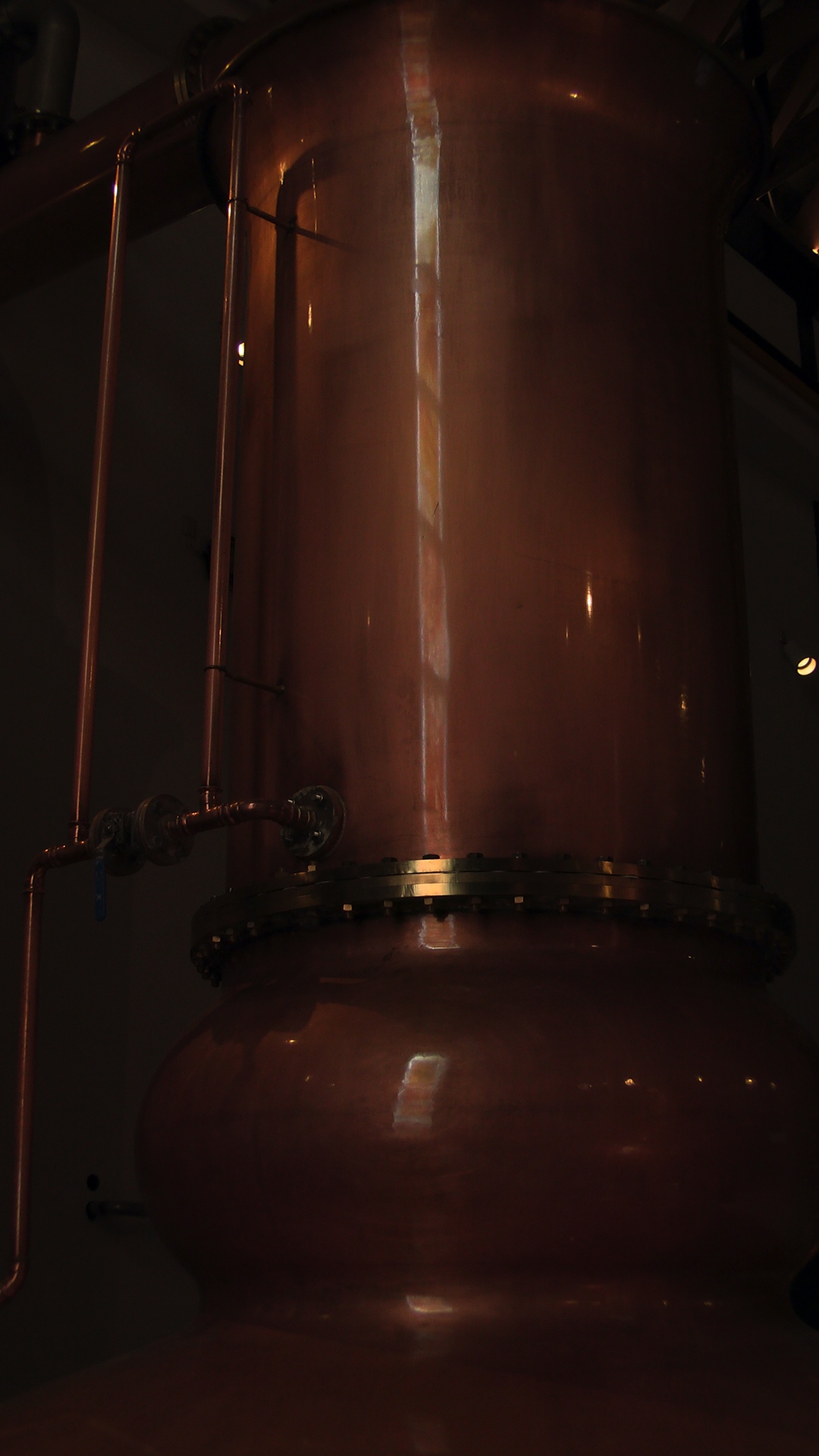
John Kenneth Clark
Glass Artist
April 2026
Glass and Light
as light changes
demonstrating the lensing quality of the final fused glass and showing the changes that happen with the changing light
The Making of the Window
making of the window
this video goes through the most important stages of the making of the window.
I made this work in an annex of the Derix Studio, almost completely alone. It took 5 months of almost daily work to achieve.
Questions and Answers
The Brief
The brief was to design something unique and appropriate to the building, function and setting. My first meetings were with the architects, Threesixty Architectutre in Glasgow. The artwork was conceived to span from floor to ceiling, 10m x 1.8m, and should be something powerful and unique. The first discussions were in the direction of stained glass. I was thinking of another approach.
Inspiration
I focussed in on a more abstract approach and thinking of the use of material. I loved the fact that this window was south facing and the light would project through the glass. The light would also be reflected from the surface of the water of the Cromarty Firth and there were trees which can add movement to a static artwork. The ever changing Scottish light gives a sense of dynamism to the window.
The colours of the whisky and the setting were very important. The first time I went on site the construction hadn't begun, therefore I found the CGI from Threesixty Architecture to be very inspirational and useful in allowing me to almost work directly in the completed building. This immediately gave a sense of scale to any design approach I was working on. The function of the still house, the heat and the processes happening in that space were also present in my thinking.
I don't employ a fixed method to designing. Many of my colleagues have a "look or style" in the work they produce — I tend not to do that. Each project is a unique opportunity to create something new. I have always tried to push the boundaries of the material I use, searching for something appropriate to the commission. Mostly, and in this case very much so, I don't know how I will make what I design, trusting to my understanding of the material to develop what is required.
Methodology
You describe yourself as a "glasspainter" — what does that mean in practice?
I chose the ancient term "glasspainter" deliberately. It connects what I do to a lineage that goes back centuries, to the great windows of the medieval cathedrals. I wanted to step away from the arts and crafts associations that had gathered around architectural glass and plant myself somewhere older and more demanding. this project is even more like glasspainting. I push around the crushed glass, often with a brush.
How do you approach light as a material — is it something you control or collaborate with?
A nice question — collaborate or control. Often it depends on the location of the project, which direction the light is predominantly coming from. A north facing window has a more constant even light, whereas the east has the morning light, south has the full blast of afternoon and the west has the evening light. That helps determine the tone of the colours used and the etching and painting methods. So always you have to collaborate with the range of expected light. Also — do you want the light to hold on the surface of the glass or project through? In a sense both: in some ways control the light, but always collaborate.
What is your process from concept to installation — do you begin with drawings, models, or directly in material?
Generally I begin either on paper or more usually now on an iPad. As I said previously, being able to work directly or create a virtual space in a CGI is very powerful. The material comes after the design. Once I have the design, then I figure out how to make it.
How does working on an architectural scale change your thinking compared to standalone artworks?
Most of my work is on an architectural scale and based on a commission. If I make autonomous pieces, they usually have some relationship to a project. Occasionally I set myself a commission. Being commissioned focusses my thinking and leads me into areas and themes I would generally not have considered. I love that — and this is what I am good at.
Material & Technique
What specific techniques or materials did you use for the Dalmore piece?
Once the design had been provisionally agreed on with the clients, I started exploring the best method for this design and this location. Over the years I have developed a relationship with the Bullseye Glass Company. The glass that they produce can be melted together — fused. Other glasses would break. I had used this material for over ten years and explored and developed various methods that I found fascinating. I had used this material to create relief sculpted works both in Europe and Kenya. The glass work for the cathedral in Kenya was all made using Bullseye Glass.
For this project, I developed a method of using crushed Bullseye glass — called frit — to create a kind of glass lace structure which I then fused to sheet glass. The final design, although completely abstract, became a kind of exploration of the making of the whisky, with the central elements being specifically the processes happening in the still house. The upper area became a representation of the maturation process of the whisky as it develops colour and intensity. The very top panel is about the flavours and scents in the whisky as the spirit meets the air.
How does the glass behave differently in a working distillery environment — light, heat, movement?
The glass is fine in this environment. You need to get over 600°C to begin changing it.
Were there any technical constraints that shaped the final design?
There were no real technical constraints other than a kind of natural limit on the size of the individual panels.
Narrative & Symbolism
Does the window tell a specific story or is it intended as a more abstract experience?
As mentioned, the window became an exploration of the making of the whisky, beginning at the base with an abstract definition of the "terroir". As you move up the window, it indicates the growing barley and the preparation of the wash. The central focus of the window is the distillation phase, showing a separation from one stage to another. Above that, the next separation is the maturation, and this area indicates the liquid transforming from a tall colourless liquid into a much deeper colour. At the top, the scents and the flavours are indicated in the glass jewels.
Are there hidden references or details that only reveal themselves over time?
There are small subtleties — such as the glass pebbles in the lowest section increasing the symbolism of the "terroir". In the maturation stage, high up in the window, there are thin strips of colour alluding to the flavours to be discovered in the whisky. The little jewels at the top represent the various scents and flavours, and even that lovely notion of the "angel's share" — suspended in a lattice of pale amber.
How does the piece evolve throughout the day as the light changes?
The piece transforms in seconds sometimes as the light changes. The window will hold the light. All the little pieces of frit form small lenses that show highlights and shadows that respond to the changing light. Also the movement of branches and clouds will create a certain visual movement in the glass.
Dalmore Context
How did you interpret The Dalmore's identity — its heritage, luxury positioning, and craftsmanship?
That question is really its own answer — what I have tried to create here is a window that becomes part of the heritage. It is unique and original. Through the scale of the piece it becomes something that cannot be part of someone's normal life. That is what Dalmore asked for, and that is what I have tried to give them.
Do you see parallels between glassmaking and whisky-making?
Both are transformative processes. You begin with raw material — sand/silica for glass, barley and water for whisky — and through the application of heat, time, and very precise knowledge, you arrive at something entirely other. In both cases, the maker has to understand when to intervene and when to stand back. There is also this idea of the irreversible moment. Once glass reaches a certain temperature, it will do what it will do. The distiller knows that feeling too.
What role should art play in luxury distilleries today?
The great windows of Europe were made possible by the Church and by wealthy merchants who understood that beauty was worth paying for. That the creation is more than the sum of its parts. I think we are seeing something similar now with certain luxury brands. Dalmore had the confidence to commission something genuinely ambitious rather than merely decorative. That matters. It says something about how they see themselves and what they want their visitors to experience. That artworks add more value than they cost is now widely recognised. I hope other brands are paying attention.
Career Perspective
You've created memorial windows and cathedral-scale works — how does this commission compare?
I love being a commissioned artist — that is what I am best at doing. I create artworks for specific locations and settings. This commission is as important as any work I have ever made. I love the setting and the light. I love the fact that it dominates the visuals of the room, the way it casts light into the space and reflects in the copper of the stills.
Are luxury brand commissions like this becoming a new form of patronage for artists?
I think so, yes. The Church, the guilds, the great merchant families — they understood that commissioning art was an act of identity as much as generosity. What Dalmore has done here feels part of that same tradition. They haven't bought a decoration, they've made a statement about who they are and what they believe their visitors deserve. That is patronage in the truest sense.
What draws you to projects that are tied so strongly to place and architecture?
Being commissioned focusses my thinking and leads me into areas and themes I would generally not have considered. I love that. Each place has its own light, its own story, its own demands. That is what keeps the work alive.
The Finished Result
What do you hope someone feels in the first 10 seconds of seeing the window?
I want the viewer to be stopped. Not to think about glass or technique or even whisky — just to be held there for a moment by something they weren't expecting and have never seen anything like before. That pause is where the artwork begins.
And what do you hope stays with them after they leave?
I would like visitors to leave with the combined experience of the artwork and the experience of being in this fabulous architectural space. That Dalmore is a special place — to take photographs in front of the window and next to these amazing stills, and to share that widely and remember the experience fondly.
At what moment did you feel the piece was "complete"?
In one sense, the glass is complete when I do the final firing — then there can be no changes. But in a real sense, the work is complete when it feels at home in the building. Seeing my clients and the architects react to it instantly, without scaffolding in the way for the first time — that was the moment. That was exactly what I would have wished for.