
JOHN KENNETH CLARK - GLASSPAINTER
Commissioned Architectural Artist
Commissioned Architectural Artist
JOHN KENNETH CLARK
ARCHITECTURAL GLASS ARTIST

For over 35 years I have created site-specific architectural glass art across the UK, Germany, USA, China, and Africa. This website showcases my commissioned works in fused glass, painted glass, etching, and mosaic for cathedrals, distilleries, and heritage buildings.
As a commissioned artist, I design each piece specifically for its location and architectural context. My priority is creating work that is appropriate to the building and its purpose, rather than repeating a single signature style.
I began my career as a traditional Glasspainter and continue to use that term with pride. While I maintain a small studio for sampling and development, larger commissions are realised in collaboration with leading studios including Derix Glasstudios (Germany), Bullseye Glass (USA), and Nakshi Glass (Kenya) — a studio I helped establish.
One of my most significant projects was leading the complete artistic scheme for the Sacred Heart Cathedral in Kericho, Kenya. This ambitious project resulted in the creation of Nakshi Glass Studio, bringing high-quality glass art production to East Africa.
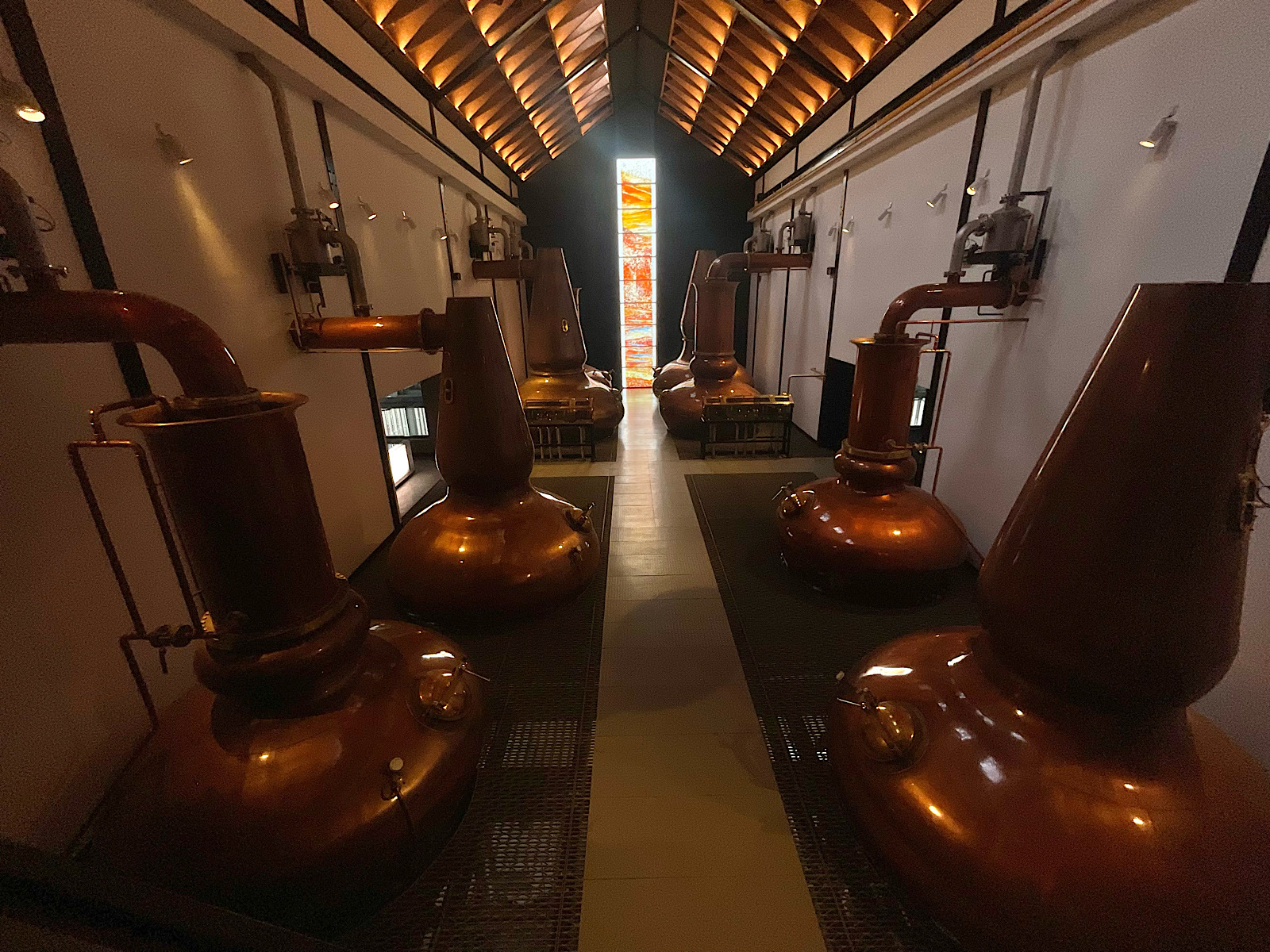
Dalmore Still Room Window
Material - Bullseye Glass and fritCommissioned and completed in 2023-24
made public April 2026
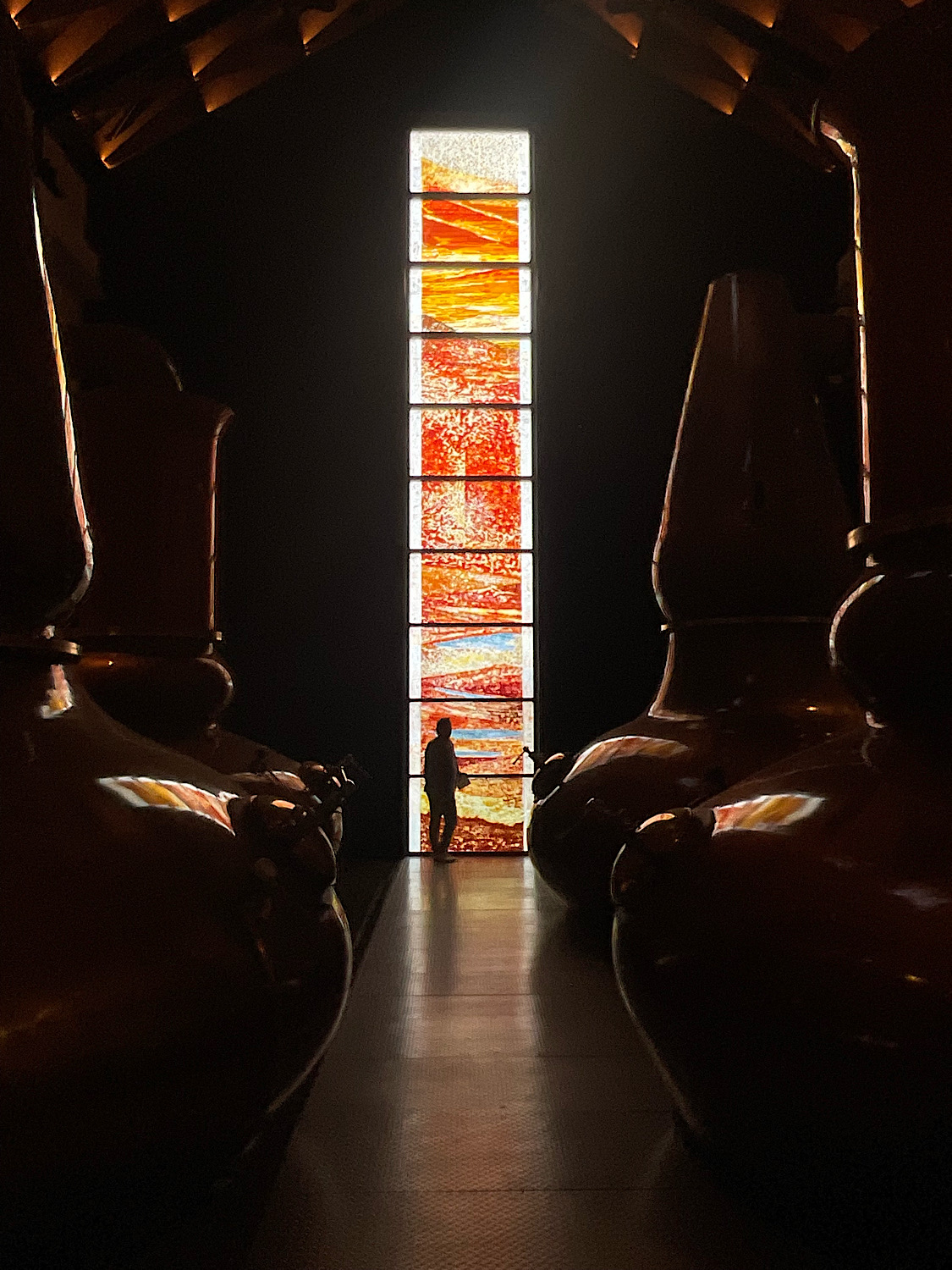
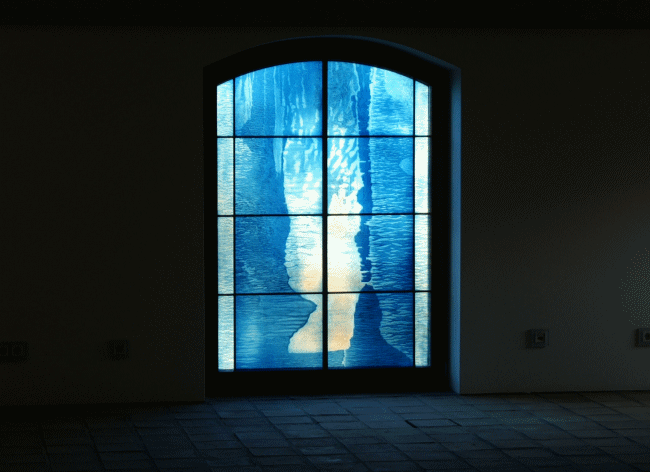
This is the most significant window I have created in Europe in over a decade — a truly unique and groundbreaking work. For this project I pushed the boundaries of glass once again, working with the exceptional quality of Bullseye Glass.
The Still House at Dalmore Distillery offered a rare and inspiring setting: a vast south-facing wall filled with the constantly changing natural light of the Scottish Highlands, overlooking the beautiful waters of the Cromarty Firth.
Commissioned by The Dalmore and developed in close collaboration with Threesixty Architects of Glasgow, this monumental fused glass artwork stands ten metres high and forms the dramatic visual centrepiece of one of Scotland’s most ambitious distillery projects.
Entirely abstract yet deeply narrative, the window tells the complete story of whisky — from the terroir and barley of the earth, through distillation and maturation, rising finally to the ethereal angel’s share at the summit, captured in a delicate lattice of pale amber.
Created using crushed Bullseye glass frit fused onto sheet glass, a technique I have refined over many years, the surface is composed of thousands of tiny lenses. These respond beautifully to every shift of light and movement, making the window come alive throughout the day.
This is not merely decoration. It is a site-specific artwork conceived for this building, this light, and this remarkable whisky heritage — designed to remain an essential part of the Dalmore experience for generations to come.
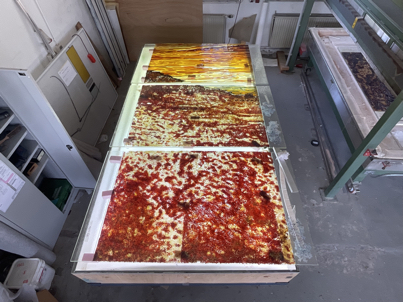
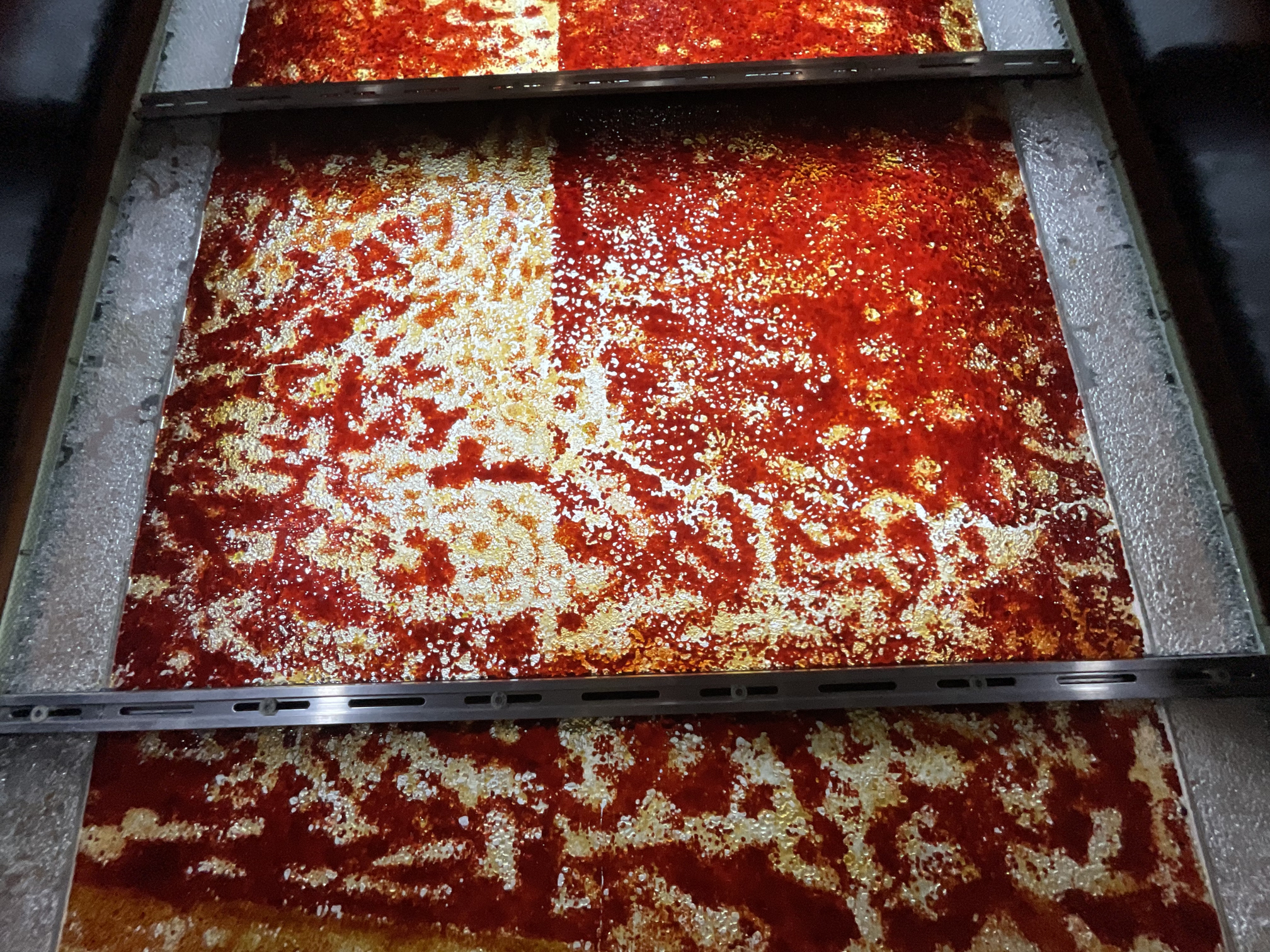
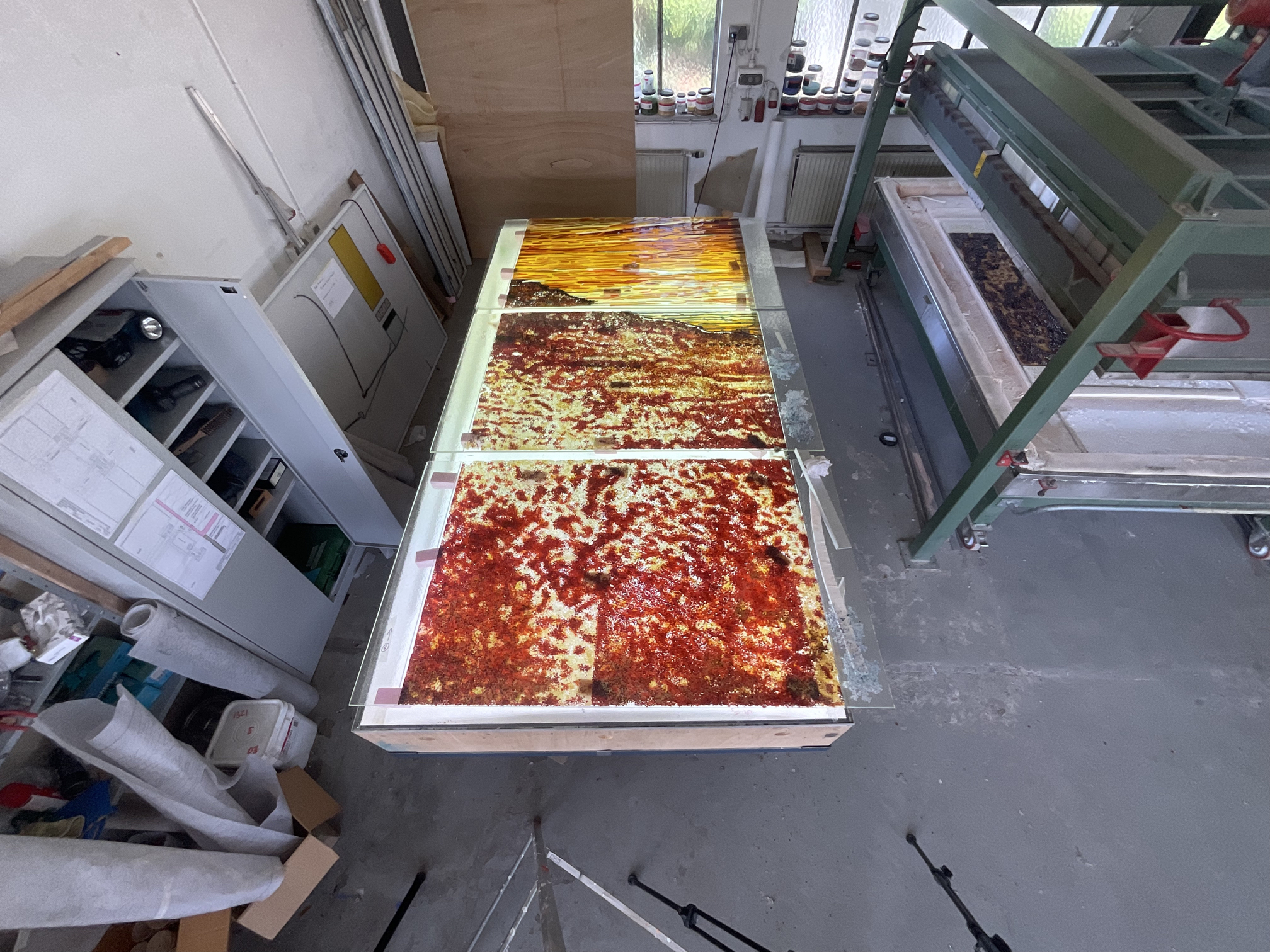
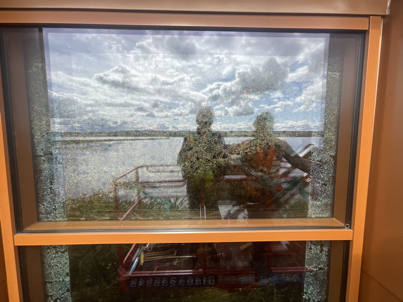
demonstrating the lensing quality of the final fused glass and showing the changes that happen with the changing light
This little video shows the window being made. I developed new methods in making this work to achieve the design I had presented. I spent five months almost daily in the studio to make this work, often I wasn't sure exactly what I was going to do, especially in the sheet glass areas.
you can see here how the frit, crushed glass, is being used. There is a beautiful random quality that happens during the firing. I can position the frit, but the heat and chemical reaction is not predictable or controllable, which I actually love, it is a quality I also use in glass etching. I call this method "controlled spontaneity".
Who gets to do a project like this? To be part of the original design team, appointed before the architects, and asked to bring all of the artworks into being. What a privilege — and what an unexpected forking of the road you thought you were on. Say no to an offer like this and you will probably regret it for the rest of your life. Say yes, and your life gets transformed. I have always preferred the possibility of regretting having done something over the certainty of regretting not doing it. The question came about following a lecture I gave at the RIAS in Dundee in 2009. I had just finished my lecture and was having coffee when this man — architect George Paterson — came over and said something like: "I know it sounds a bit crazy, but I have been asked to build a cathedral in Kenya. Will you come and help me?" So began a great adventure that carries on to this day. The Sacred Heart Cathedral, Kericho was dedicated on Pentecost of 2015. The artworks were finally completed in 2018. There is a film about the project, focused mainly on the building and the making of the artworks. I took on the role of videographer and filmmaker, as the clients — based outside Kenya — wanted regular reports showing what was happening between their visits.The Kericho Cathedral Project
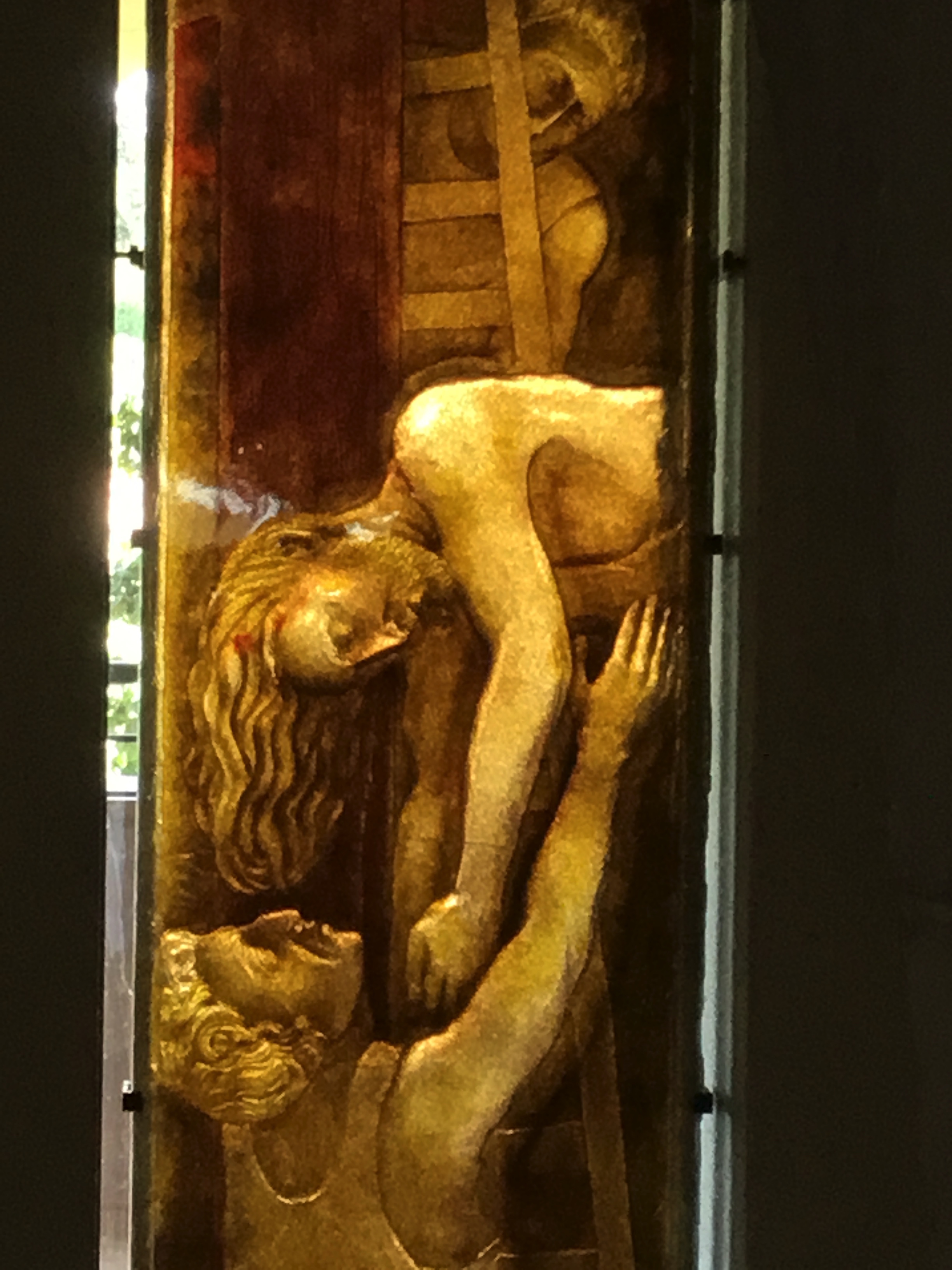
Florence Wangui, our principal artist, designed and made the full series of glass Stations of the Cross panels and the bronze relief sculpted panels for the main doors. Florence sculpted the reliefs, which were then cast in bronze by Rajinder Kumar Anand at Alchemist Workshop in Nairobi.
We also worked with outstanding mosaicists and sculptors:
I designed the roof, which is made of Kenyan clay tiles laid in a flowing pattern based on wheat. Together, the artworks create a rich and cohesive collection:
One special request from the client was to ensure the imported equipment and materials would continue to benefit Kenya. We took on this challenge. The concept of Nakshi Glass Studio in Nairobi is to realise the legacy of this massively complex project. The studio maintains the specialist equipment (including the large glass-fusing kiln we imported) and provides ongoing opportunities for Kenyan artists to learn and practise these skills.
I made a video about the whole project, mainly focused on the artworks. It captures the spirit of collaboration and creativity behind this landmark Kenyan cathedral.
Watch the full Kericho Cathedral film →This project was an astonishing challenge and a profound privilege — one that continues to inspire through its beauty and its lasting impact on Kenyan artistic practice.

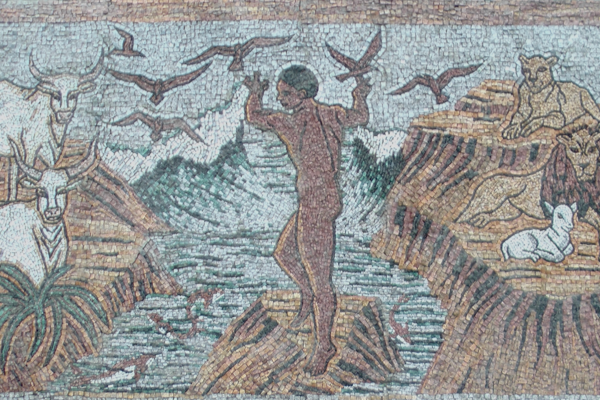
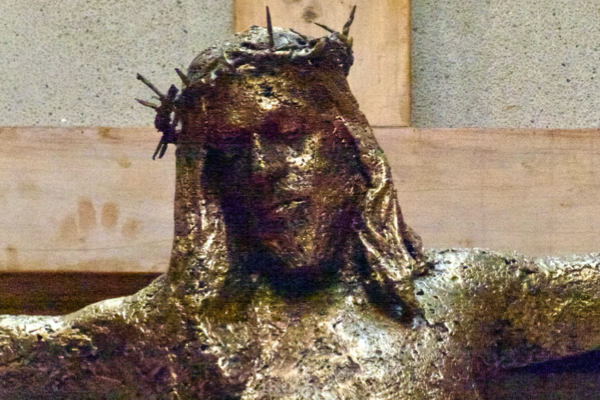
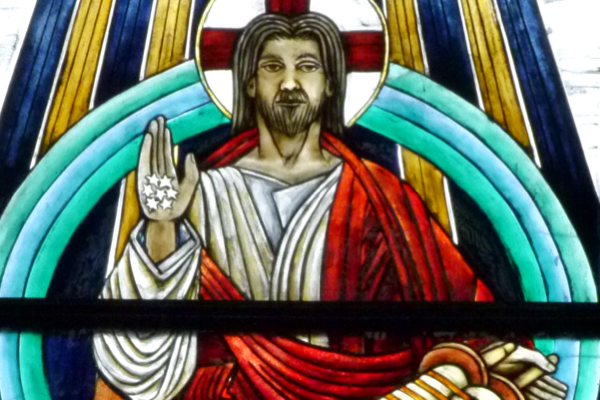
This video is quite long but focuses mainly on the creation of the Sacred Heart Cathedral in Kericho and its artworks. It shows the artists and craftsmen — especially Florence Wangui and the team — bringing the project to life.
When the Kericho Cathedral Project began, I suggested that the project be filmed. the clients didn't want anyone from outside to be involved, but if one of the team could make some home videos, that would be great. so began my dangerous extra career as film maker.
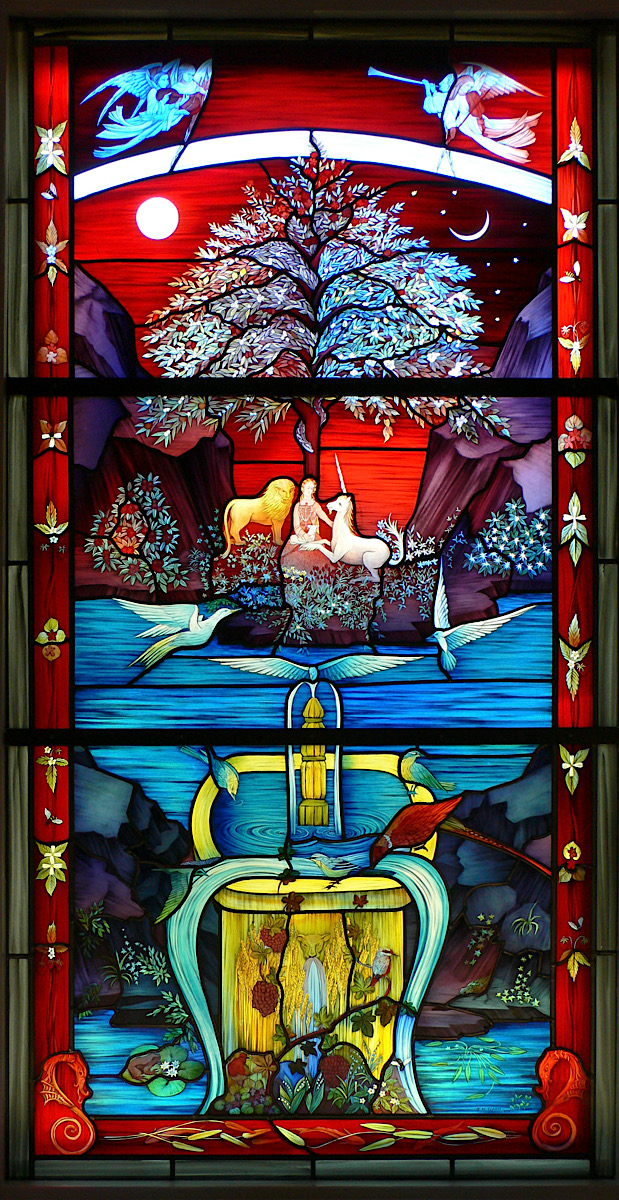
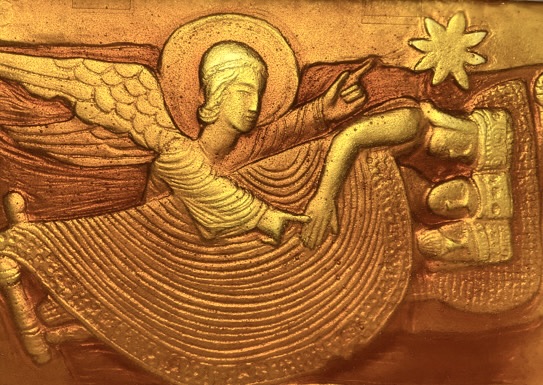
A window in three worlds — Heaven, Paradise and Earth — drawn from the imagery of medieval tapestry and the language of ancient symbol.
At the base, Earth — a fountain alive with birds, fish, and water-plants. Above it, Paradise: the Woman and the Unicorn beneath the Tree of Life, a Lamb in her lap, a Lion at her shoulder, doves crossing the water that separates the unreachable from the known. Higher still, Heaven — Angels swooping from either side against a deep red sky, the Firmament dividing the celestial from the terrestrial.
The title came as the design resolved itself. This is the threshold moment — the last breath of innocence before something is lost. The imagery is medieval in its sources and its symbolism, but the feeling is timeless: the garden still whole, the serpent already in the tree.
Made entirely in traditional techniques — mouth-blown flashed glass, acid etching, silver staining, and black glass paint fired at 650°C — this is among the most technically complex windows in the artist's body of work.
Read more →
The Glenmorangie Still House Window was the project that changed everything.
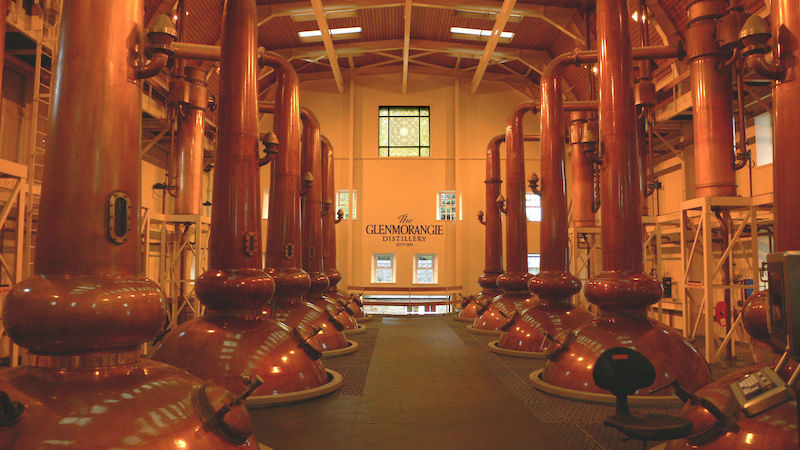
Commissioned through an invited competition, it asked me to translate one of Scotland's great Pictish carved stones — the Hilton of Cadboll stone, source of the Glenmorangie signet — into a window for the still house at Tain in Ross-shire. The still house is sometimes referred to internally as the Cathedral, a term coined by the LVMH marketing team. Standing in that room, beneath the extraordinary height of the tallest whisky stills in Scotland, the name feels entirely earned.
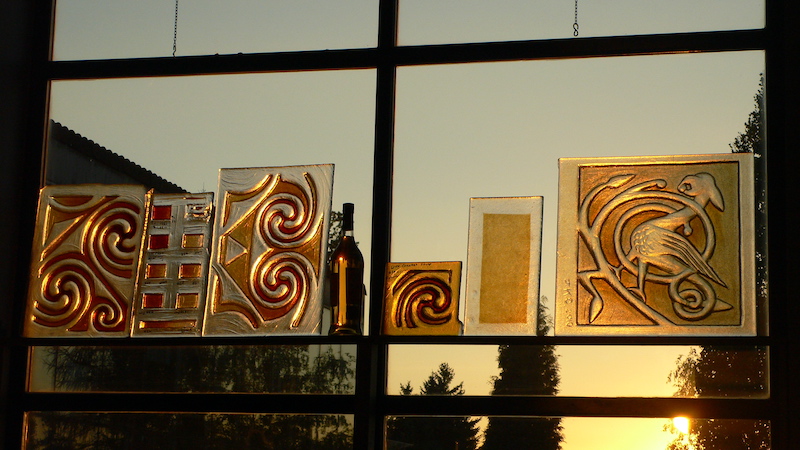
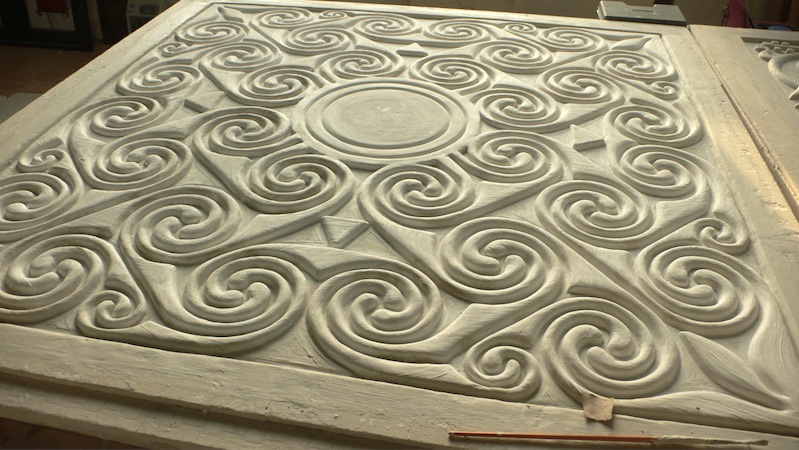
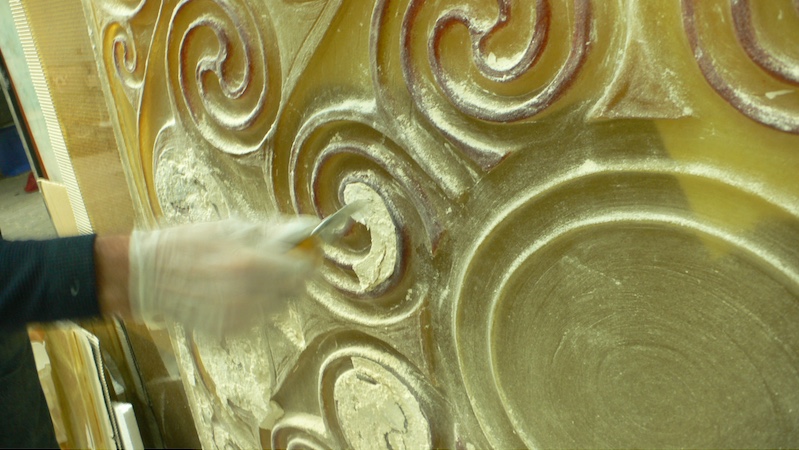
The stone is a relief sculpture. It seemed obvious that the window should be one too. What was not obvious was how to make it — and in particular how to introduce the whisky colours the client asked for. The search for a solution led me to Bullseye glass and to a method of fusing crushed glass frit onto relief-cast forms that I had never used before and have used in almost everything since.
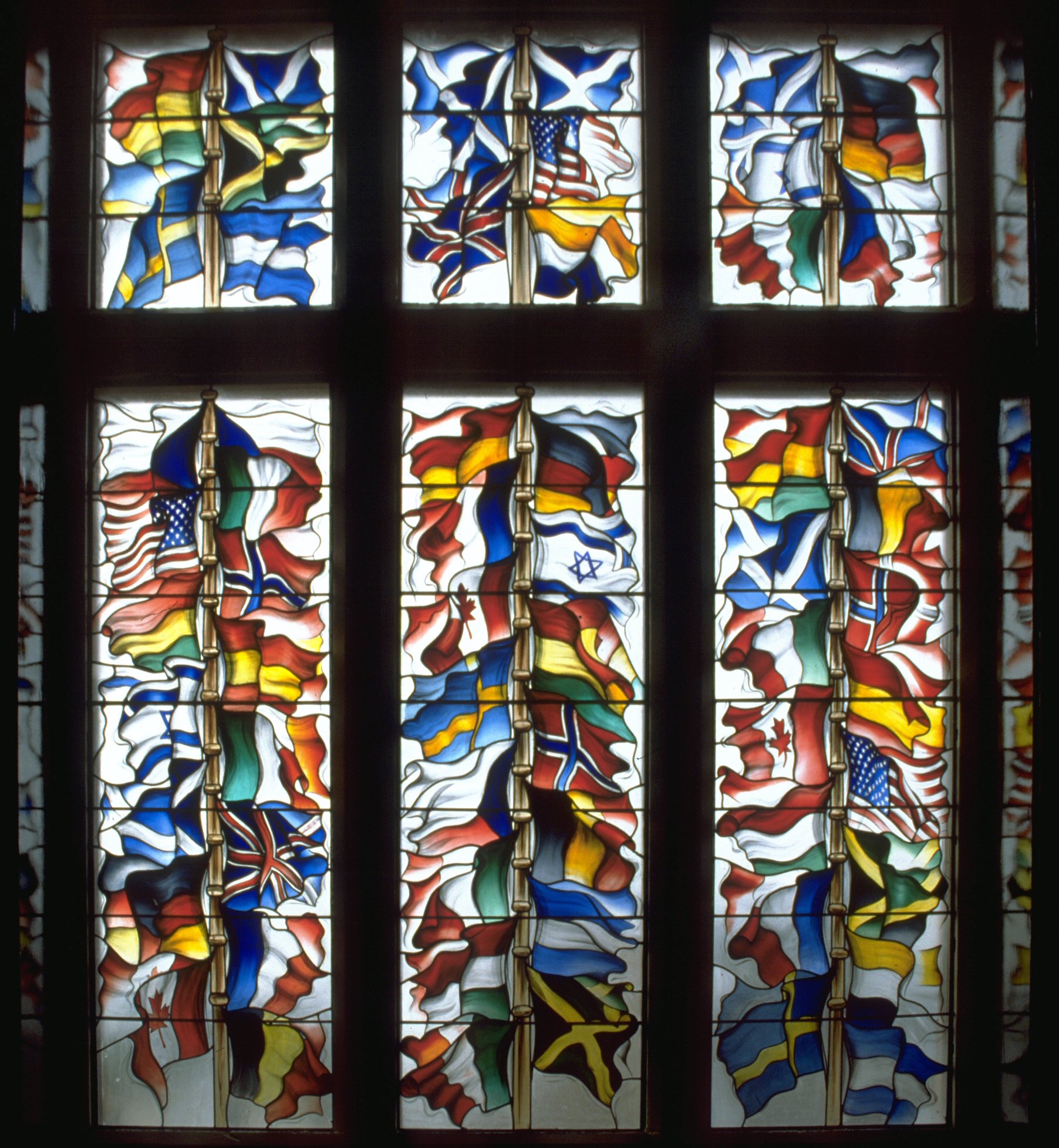
On 21st December 1988, Pan Am Flight 103 was destroyed over Lockerbie, Scotland. 270 people from 21 nations were killed. Three years later, this window was installed in the Lesser Town Hall — in the room first used as a temporary morgue.
The brief was almost impossibly restrictive: no religious symbolism, no depiction of the disaster, no reference to the aircraft or the dead. The only subject that could be explored was the flags of the victims' nations.
The flags are scattered rather than ordered, echoing the randomness of who was on that flight. They billow and overlap around shared flagpoles, caught in the same wind, on a ground of clear glass that stands for the sky itself — a memorial made of light and air, the two qualities a flag possesses that no other symbol shares.
Read more →
Just to explain some of the methods and techniques I use when creating glass projects. this little set gives an indication of the method and how it works. it will help you understand the terminology used.
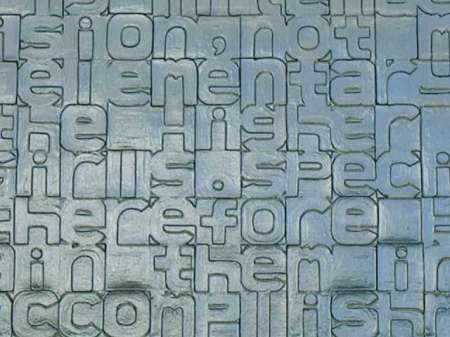
Glass is not quite completely melted onto a mould. The glass is liquid enough to take up all the detailing on the mould but not so hot as is required for complete fusing. glass slumping
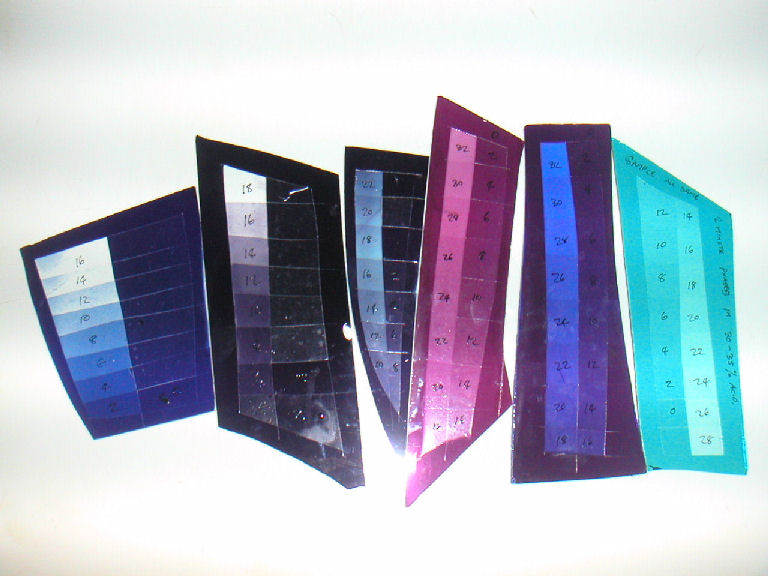
Flashed glass, a layer of colour fused onto a base glass during the making process, is etched away using acid. various methods are used to shield the colour from the acid allowing a wide range of tone within the glass pieces. These examples use transparent plastic foil as the resist.
About glass etching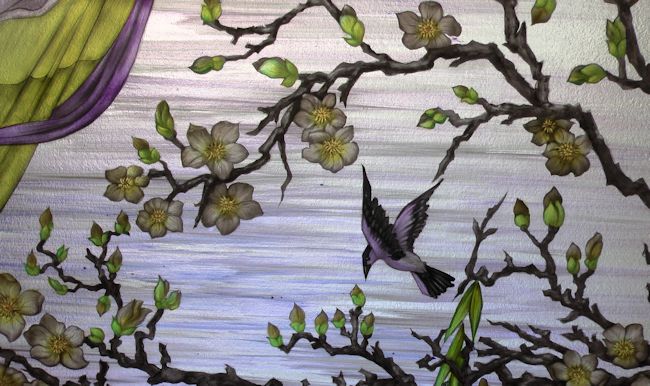
Generally, a black or brown special pigment that is painted onto the glass, think of charcoal on paper. It can be linear or tonal. When the paint is applied to the glass it has to be fired at around 600C to make it permanent. In this image transparent glass colour and silver stain are also used.
About glass painting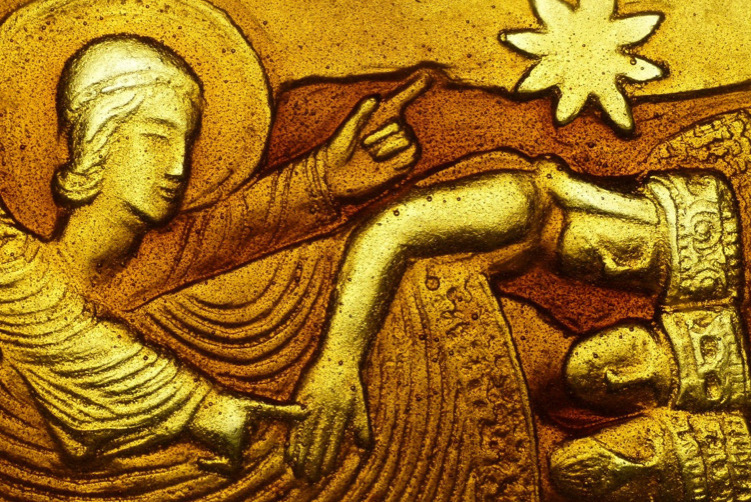
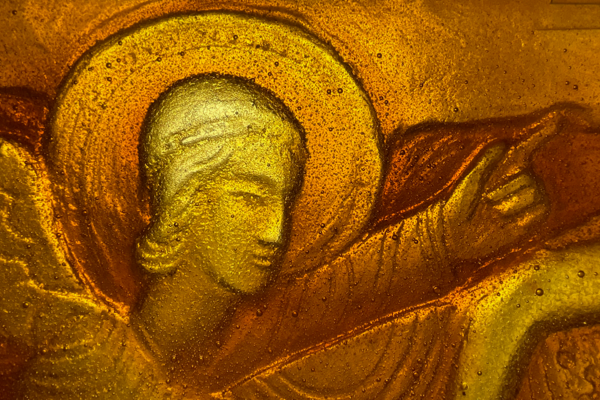
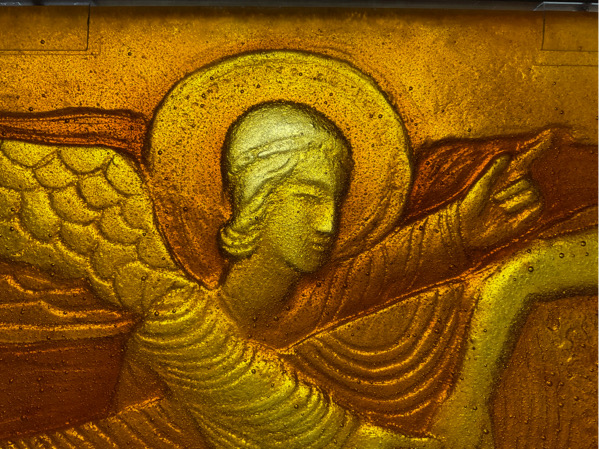
This example is made using Bullseye Glass. A mould was made by casting a clay sculpture, a negative mould is created, in this case Bullseye amber frit (crushed glass) was poured into the moul, sheet glass on top and it was fused (melted), the glass picking up the details from the mould. about glass fusing
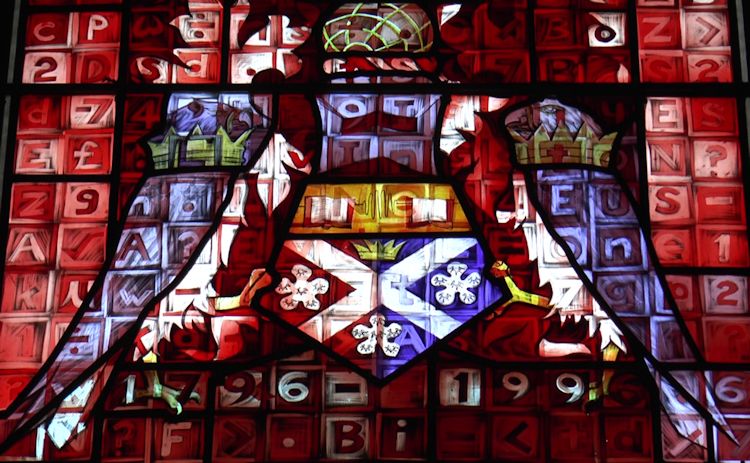
A combination of glass repeat etching and then traditional glass painting and silverstaining to create this extraordinary complex image.
more about glass etching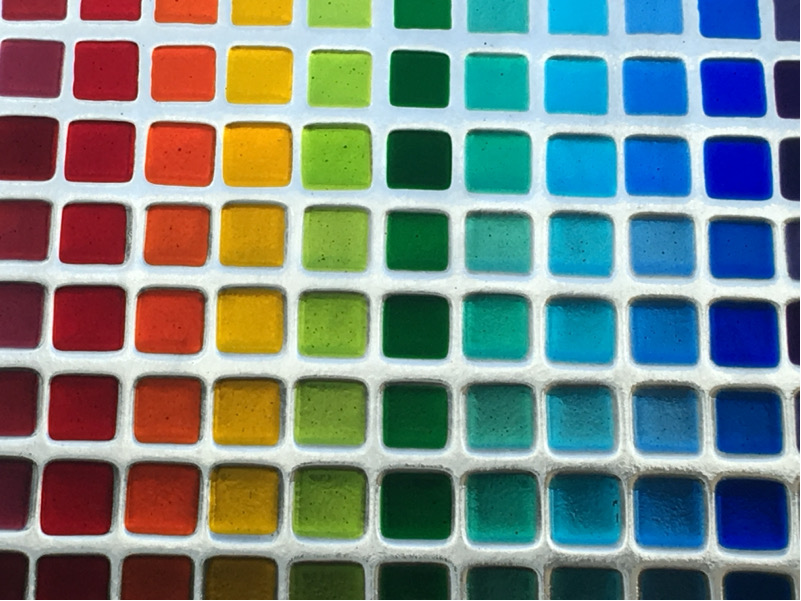
Generally I use Bullseye glass when I am fusing. There are other companies, but I like and trust Bullseye. This is a detail from a colour range I made to establish a tonal range from some colours for my music-glass concept
glass fusing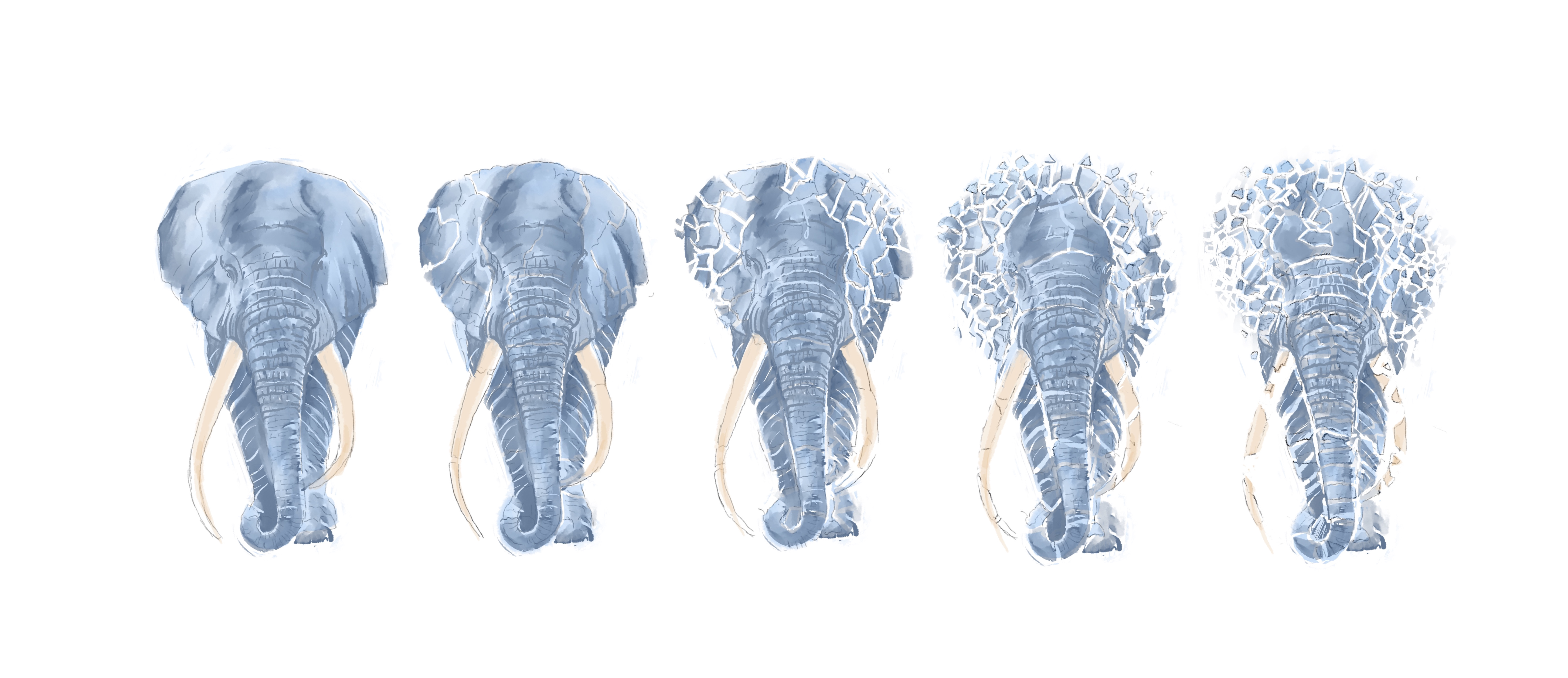
The “Shattered Elephant” theme stands out as one of the most striking concepts for conservation. These magnificent creatures, despite their size and strength, are terribly vulnerable to modern weapons and the brutality and greed of humanity.
We first developed this idea when invited to explore themes for glass artworks for the Uhuru Gardens Museum Complex. This ambitious architectural project, both huge and exciting, is nearing completion but has been stalled for the past few years. The original concept presented to us didn’t work as a glass project—it was entirely impractical—so we began rethinking what might.
Our initial panels stood about 90cm high. We modelled them in clay, then turned them into “investment moulds” that could be fired in our large studio kiln. These early works were three “float glass” panels—normal window glass, but over 20mm thick. We shared them with the museum’s committee, and they sparked a decision to commission two panels on the conservation theme, focusing on the elephant.
We also fused a panel using “Bullseye Glass.” Unlike float glass, it has no green tinge and stays very transparent, though it’s far more expensive. Eventually, we were commissioned to create a large version of the “Shattered Elephant” concept as one of the two panels for the museum. We based this sculpture on a famous tusker named Satao. The piece went through four development stages before we crafted the final mould. In 2021, we fused the elephant part, but the project has since slipped into stasis, leaving the work incomplete. Still, we’ve kept exploring the theme on our own.
For more information or purchase inquiries, please feel free to contact us.
Thank you for your interest in the Shattered Elephant!
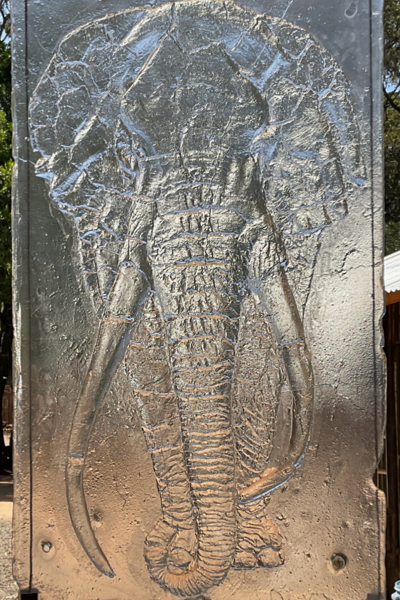
this is taken from the first elephants we made in the Nakshi Glass Studio in Kenya. this elephant is around 90 cm tall and has been fused on a sheet glass base.
View Project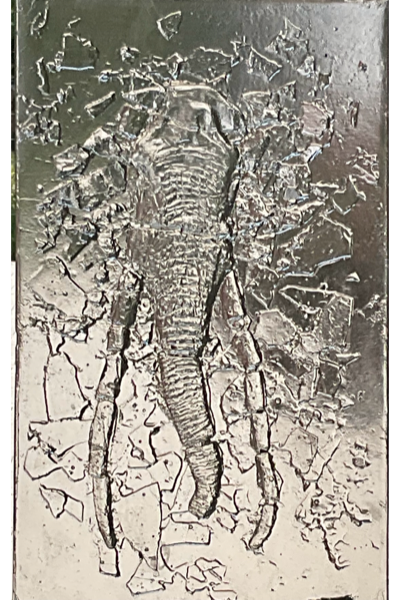
this was created by taking a mould of an already shattered elephant and casting it again allowing the background also to break and shatter.
View Project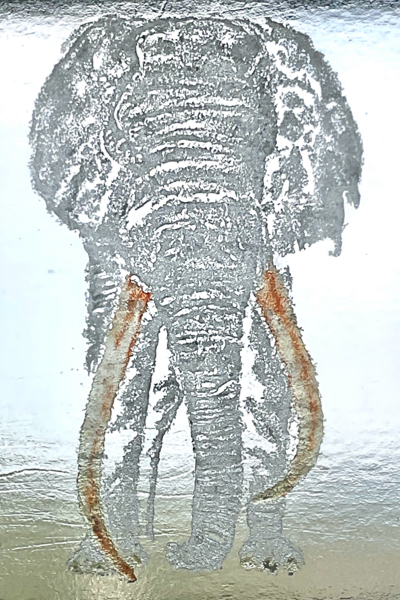
in this case I have used the frit, crushed glass, to create a drawing of the elephant and allowing the fusing process, the extreme temperature to randomly pull the particles together in a controlled manner. It is titled "is this all that I was."
View Project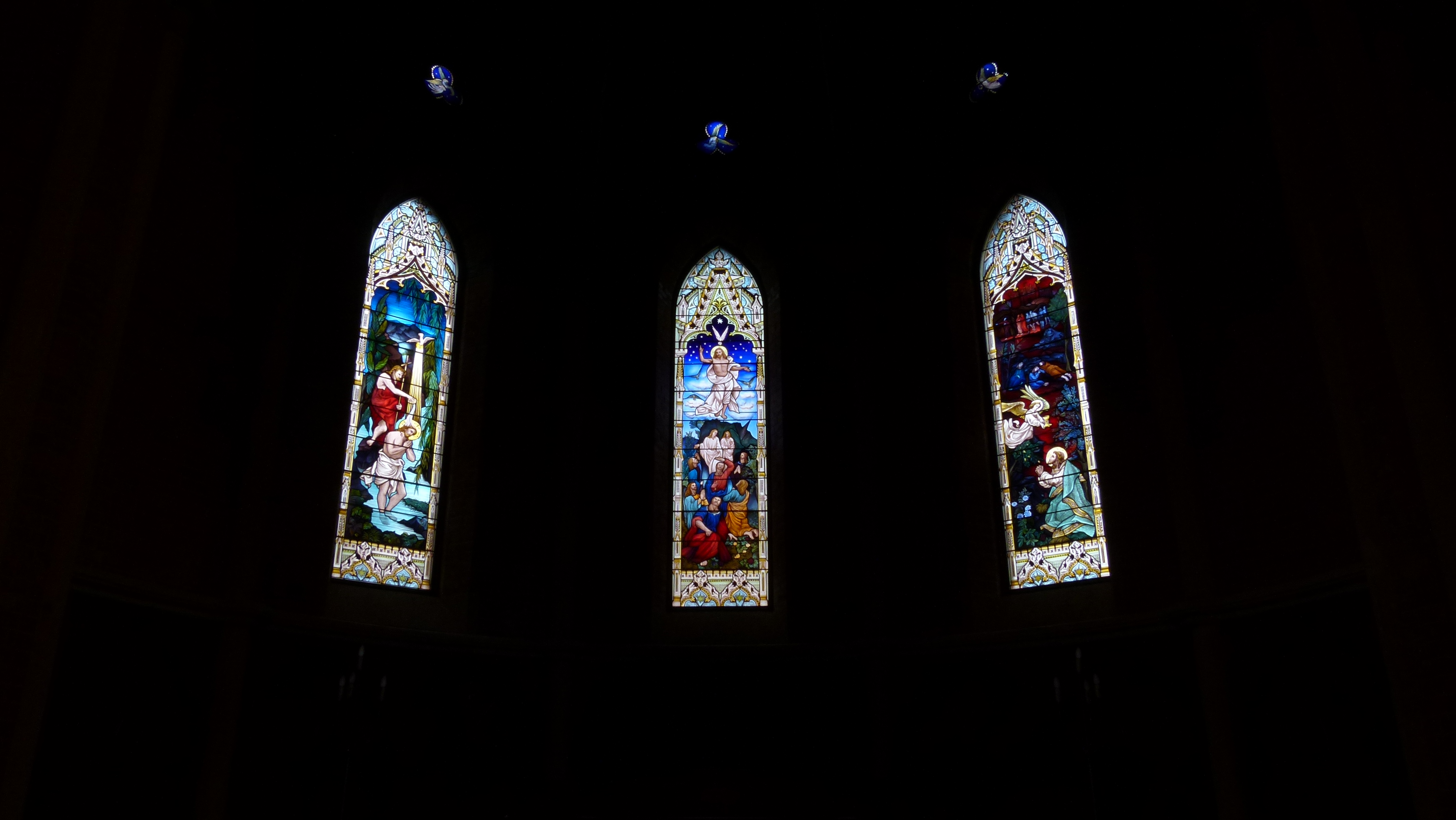
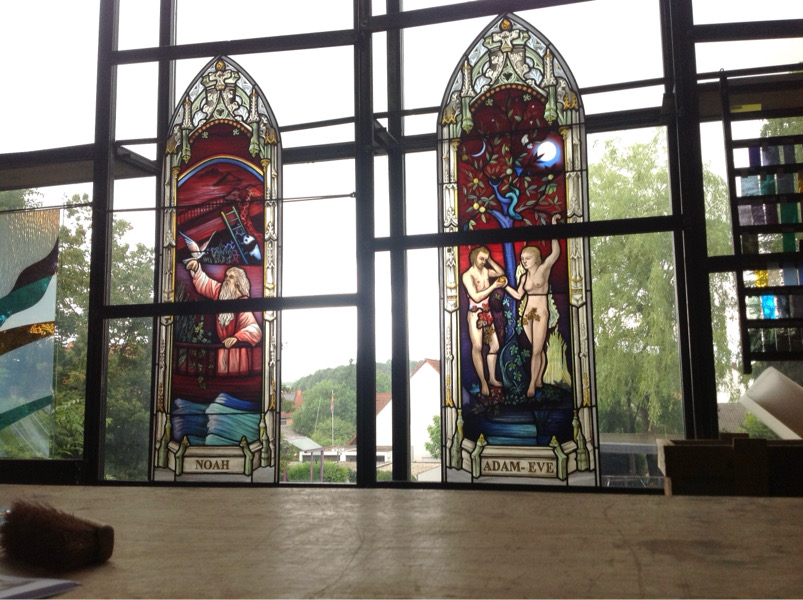
These Windows were created to try to partly emulate the original Victorian Windows that had been destroyed. In discussions with the church, three themes were selected. Following the acceptance of the designs, I made these windows at the Derix Glasstudios in Taunusstein, Germany.
It wasn't the intention to try to deceive that these were the originals. However I did try to source the types of figures and borders from small sketch designs found in the church archives. I was asked to create more of a feeling of space within the works. This was achieved by extensive acid etching.
The second part of the project was to create to sets of nine windows for the side facades, probably east and west. These we agreed should be an Old testament window and a New Testament window each with a small rose window at the apex.
Holy Trinity Shanghai - Christ Windows Material - Lamberts Glass, mostly Flashed Glass Technique - Extensive etching, painting and silver staining Dimensions - 3 x mts x 0.7mts Explanation of the design concept.I have tried to design a set of windows that in keeping with the style of the original windows from early in the 20th Century and within this style, to interpret the themes selected by the church. The style of work and the architectural elements, canopies and borders are taken directly from works made by the company who, I am fairly sure, made some the original windows for the Holy Trinity in Shanghai. John Hardmann and Co, London.
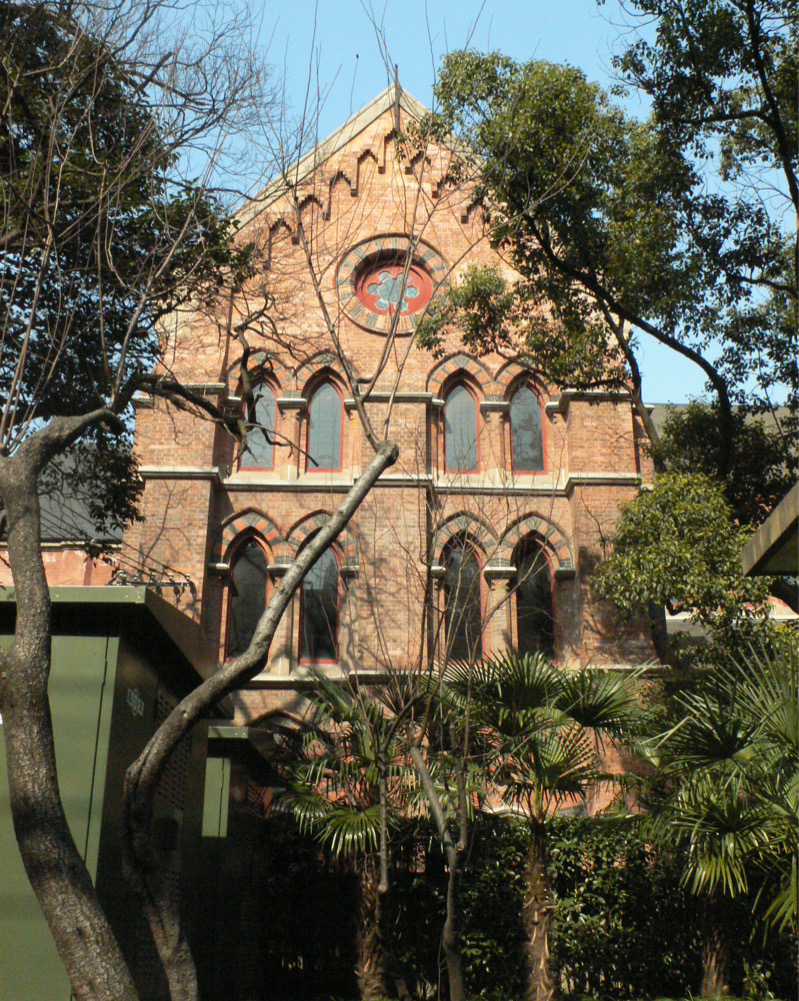
The Holy Trinity Cathedral, known as the “Red Church” due to its red brick exterior, is an Anglican church in Shanghai, originally constructed in 1866–1869 by architect Sir George Gilbert Scott.
By the 1920s, the cathedral was a central hub for the Anglican community in Shanghai’s International Settlement, serving both religious and social functions for the expatriate population.
This illustration shows the West facing facade.
Firstly the windows behind the altar were made and installed. Soon after, designs for the East and West facades were commissioned, designs were produced and the windows made.
The first stage was the three Windows behind the Altar. We agreed that there should be three themes, one in each window. There is a very fuzzy photograph showing that originally there were six themes, two in each window. I was asked to work in the style of the probable originals but to use my approach using acid etching to create a less visually heavy set of windows with a greater sense of space. The second part of the commission was to create windows for the east and west facades. We agreed on Old Testament and New Testament themes and using the same visual language as the windows in the south facade although these windows were to be less like Victorian Windows.
When I was designing the Noah Window, I added a panda climbing out of the hold. This caused great delight when it was seen.
I am not sure if services are held in the building or if it is open to the public.
Following the completion of the second set of windows, I edited a short film about the making of the windows focussing on the making of the two small Rose windows. Follow the link below to see the video.
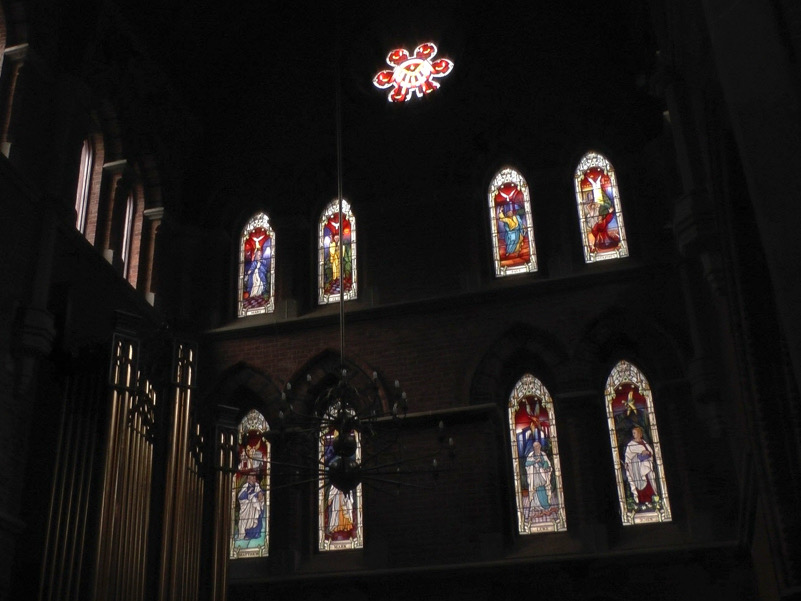
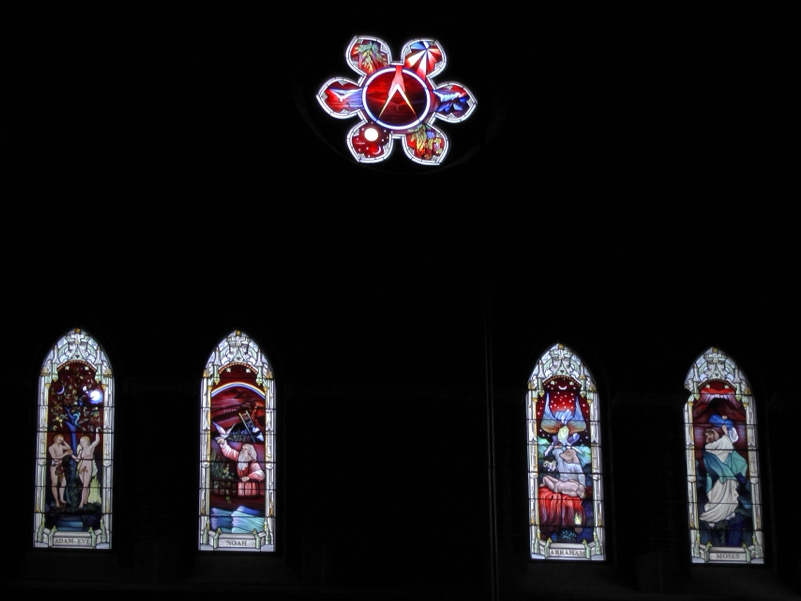
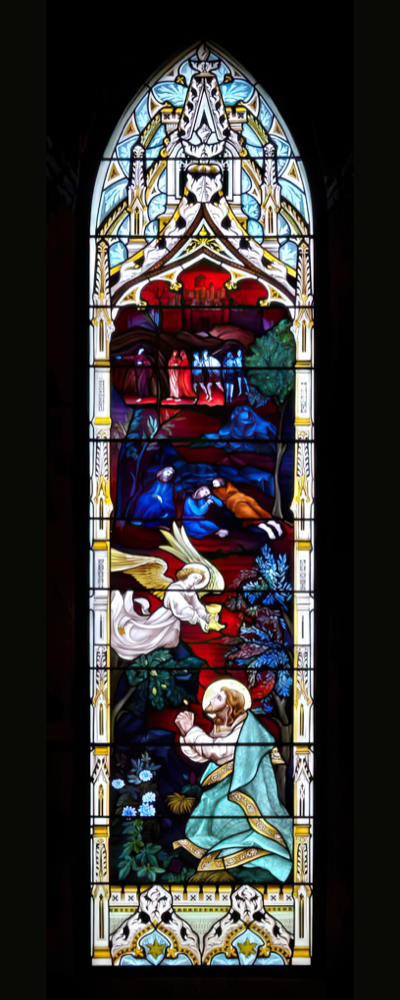
One of the lancets behind the altar. The Garden of Gethsemane. this set of three windows were the first part of the project. I think that these Windows are basically south facing.
View Project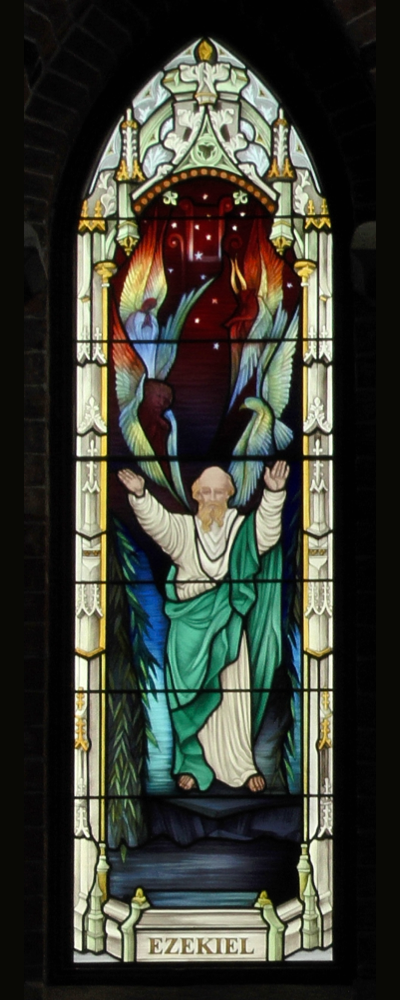
The East facade, a series if 8 vertical windows and a small rose window. The theme of this facade is the Old Testament and this panel shows the figure of Ezekiel.
View Project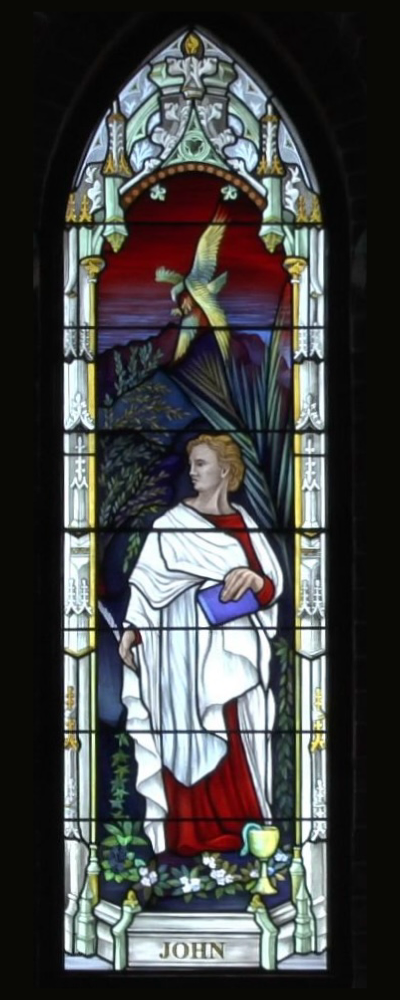
Same structure as the east facade. the theme of this set of windows is the New Testament. this is one of the Evngelists, John.
View Project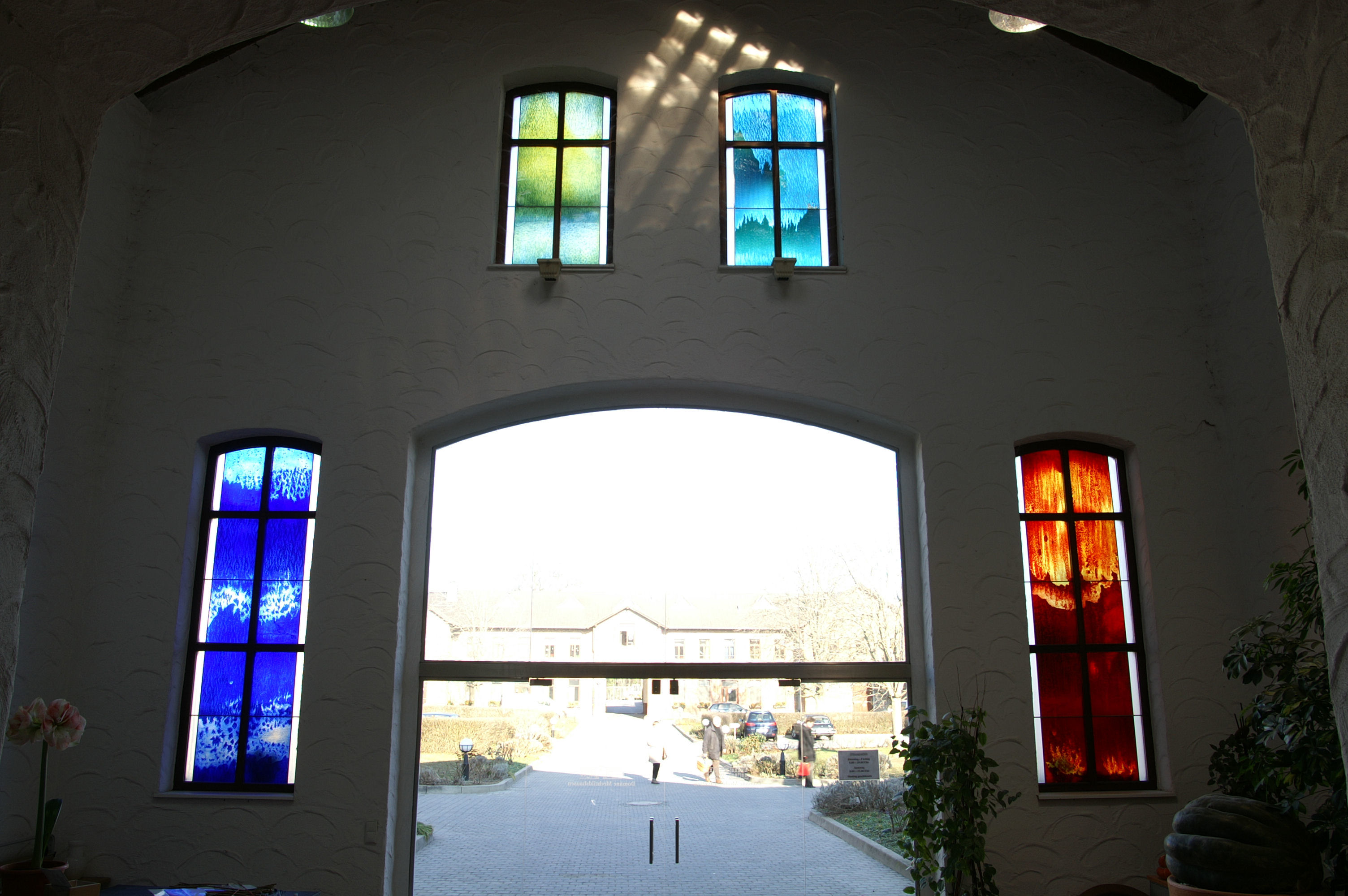
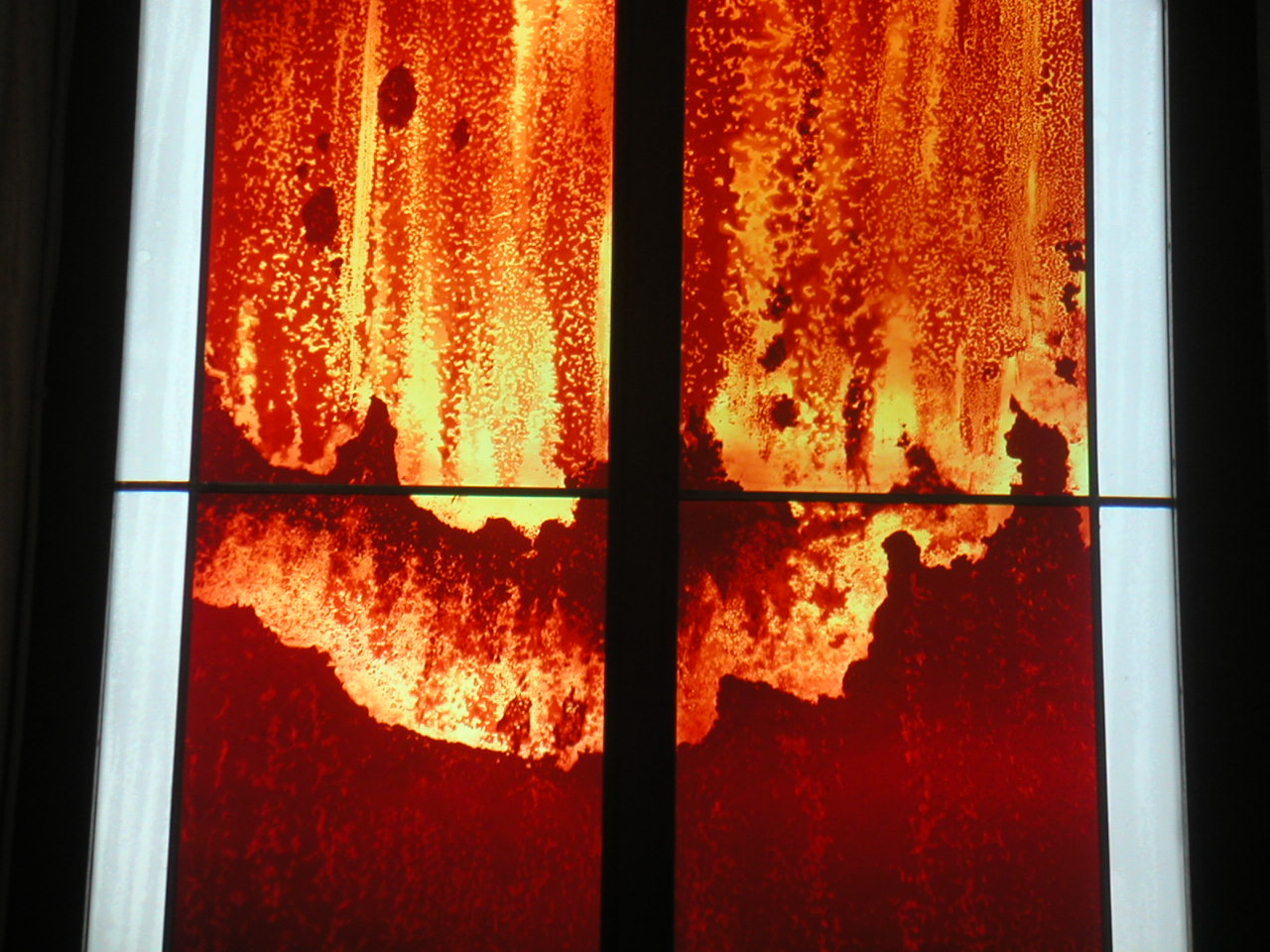
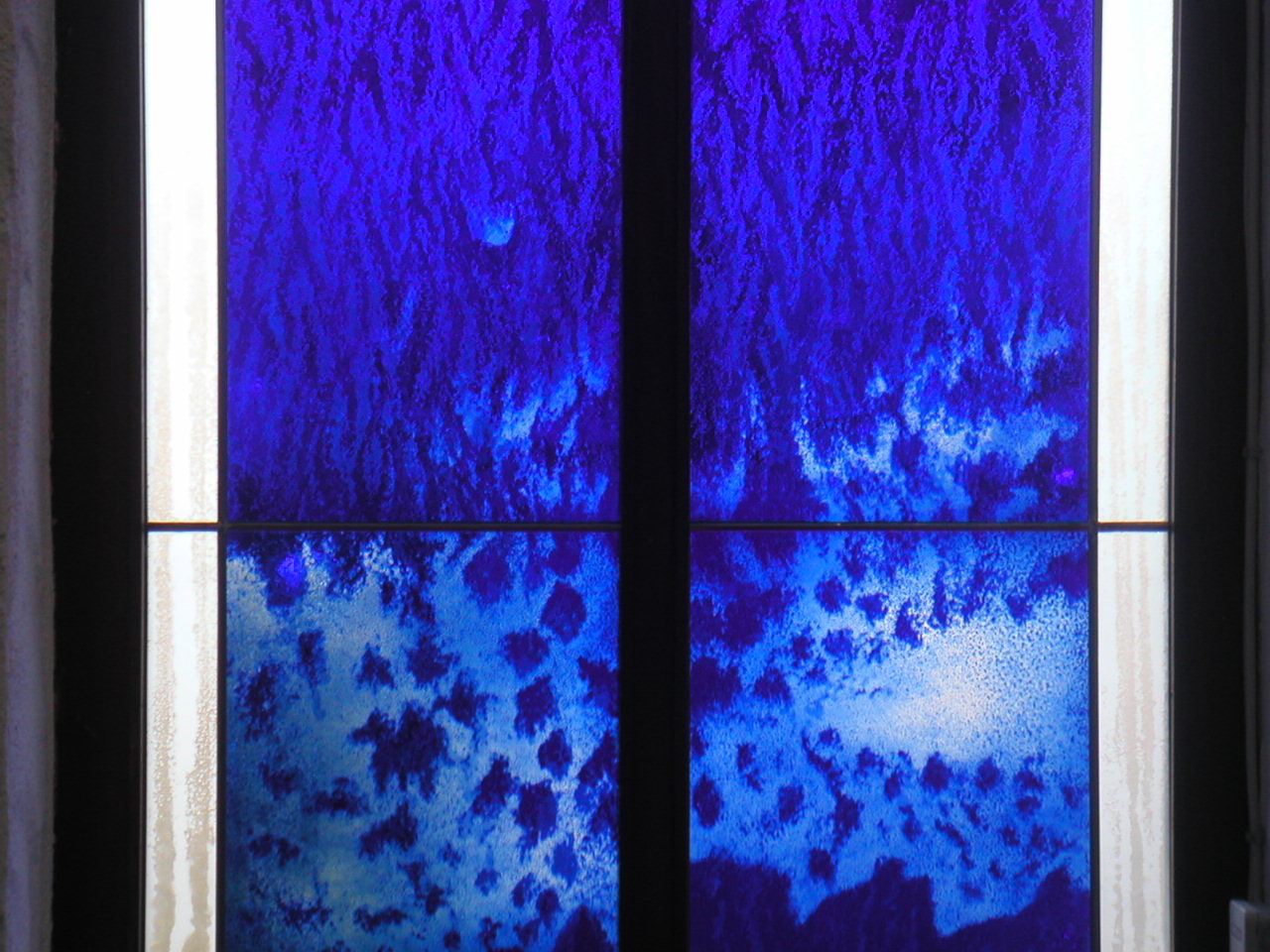
Just outside Wiesbaden, in a working organic market, restaurant, café, and hotel called Domaine Mechtildshausen, sit six windows that contain no paint and no enamel at all. Every image in them — every gradient of colour, every texture, every hint of depth — was created entirely through acid etching and, in three of the six, silver staining applied to the back of the glass. Nothing was drawn onto the surface. What you see is what remains of the glass after the acid has done its work.
The commission arrived without a brief. Herr Bourgett, who ran the Domaine, saw an exhibition and simply asked for something appropriate to the building and its philosophy — a place organised entirely around the fundamental products of the earth, food grown from soil, watered by rain, ripened by sun. That openness led to a theme found in cultures across the world: the elements themselves. Fire, Water, Earth, and Air, made in 2003, followed two years later by Sunshine and Ice.
The designs came not from drawing but from monoprint — a process built on controlled chance. Translating that spontaneity into glass meant developing an entirely new method at the Derix Glasstudios in Taunusstein, where I worked the glass myself through roughly four weeks of experimentation with acid resists, building each surface through extremely complex layers of etching, washing, and re-etching. This is where the concept of controlled spontaneity first fully took shape — a concept I later carried forward into the Hirschberg Former Synagogue project.
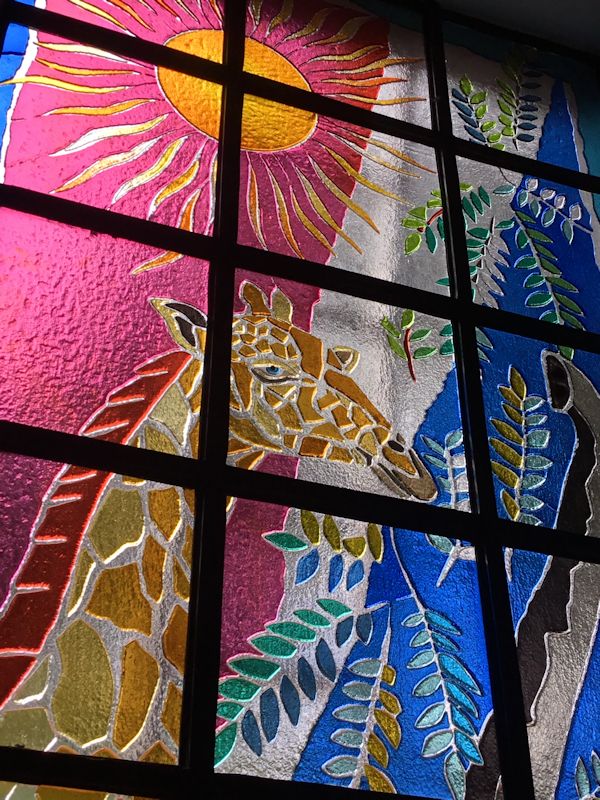
this joyous and colourful window is made using Bullseye Glass. i love this glass. it can be melted together or, like in this project, on a base glass.
It was made in the Nakshi Glass Studio in Nairobi for a private villa in the Karen district.
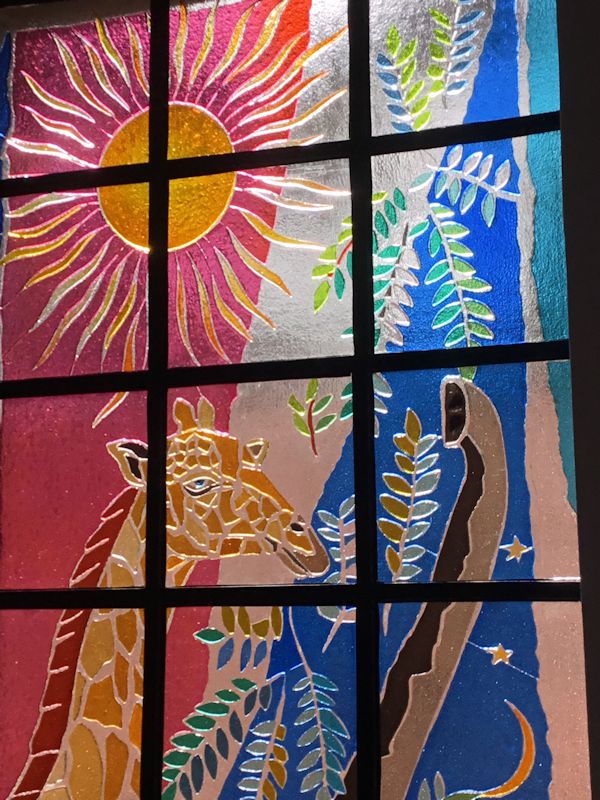
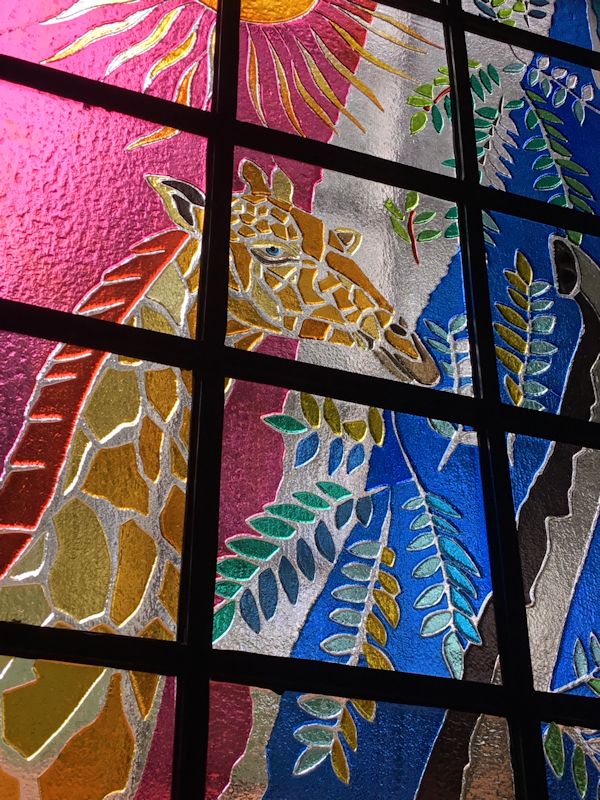
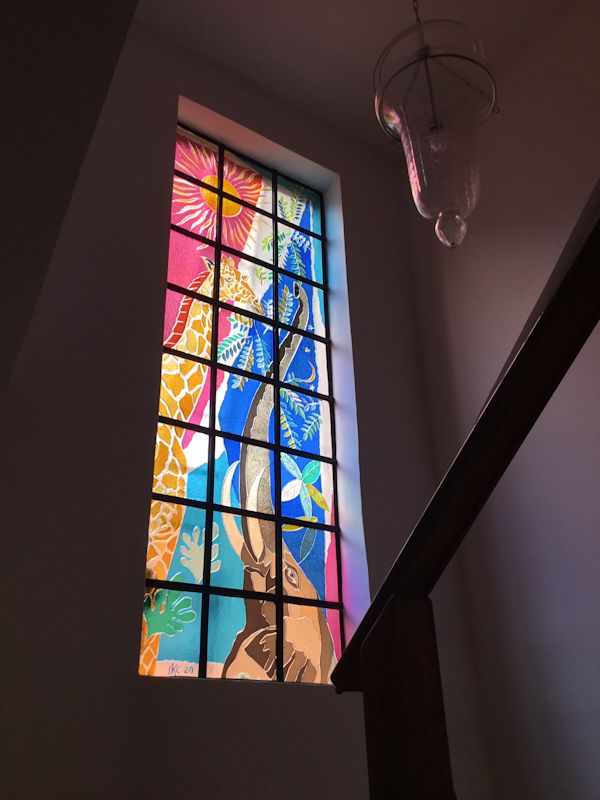
this joyous and colourful window is made using Bullseye Glass. i love this glass. it can be melted together or, like in this project, on a base glass.
It was made in the Nakshi Glass Studio in Nairobi for a private villa in the Karen district.
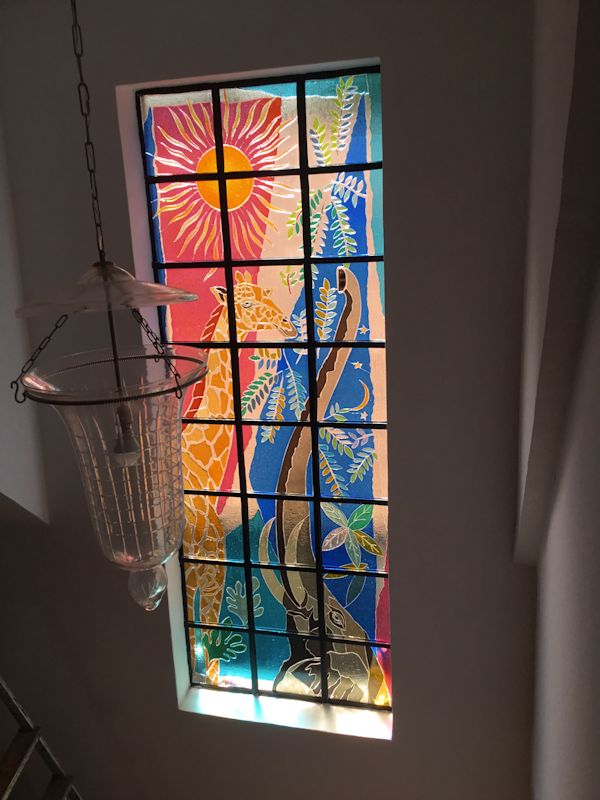
We wanted to make something in glass a bit like the Matisse cutout collages. There was no specific theme given by the clients except there should be a bright African sun. the first idea was just the giraffe. this is a staircase window and the thought was that a giraffe could walk past. The elephant was requested and this concept was prepared.
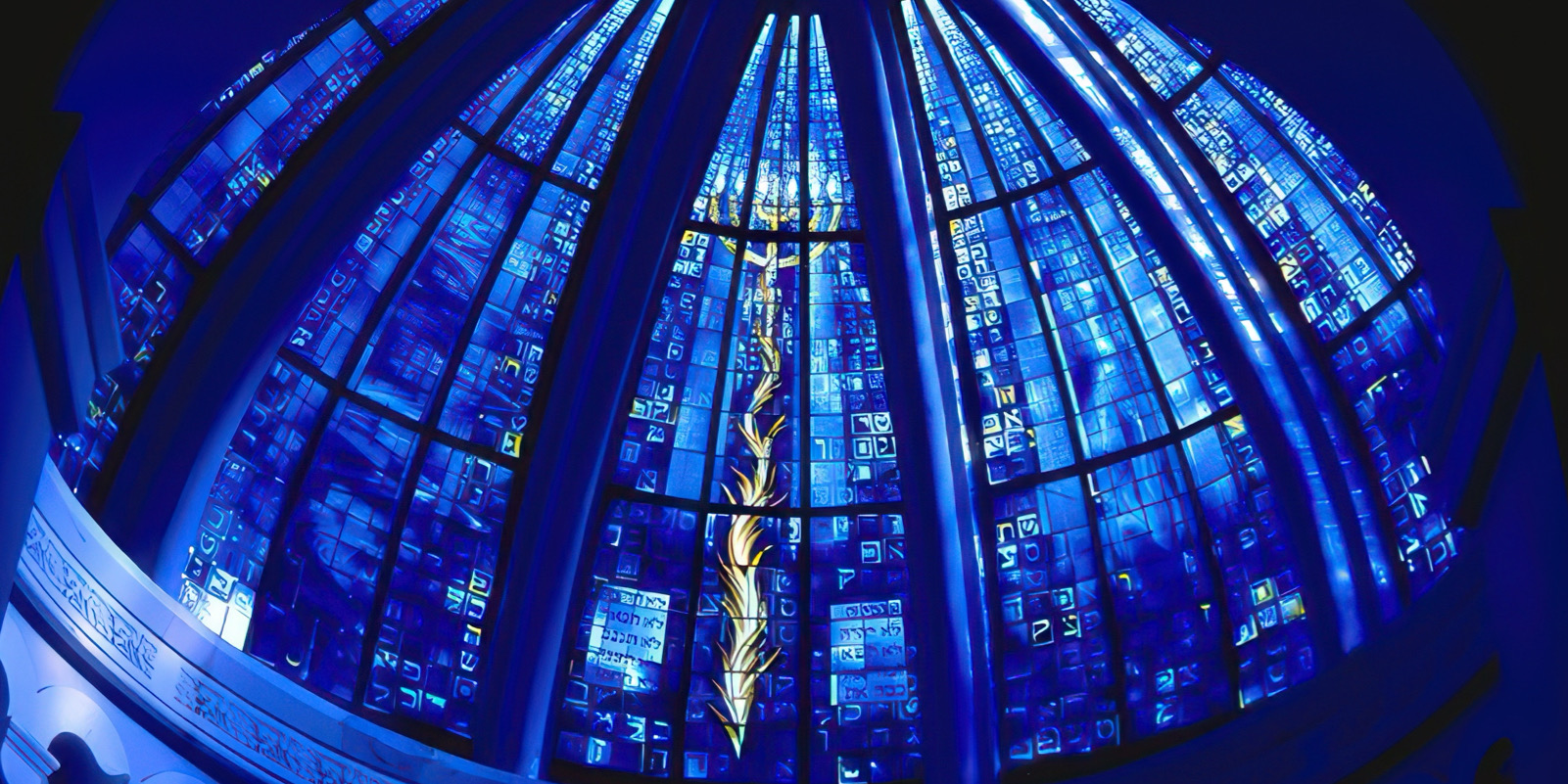
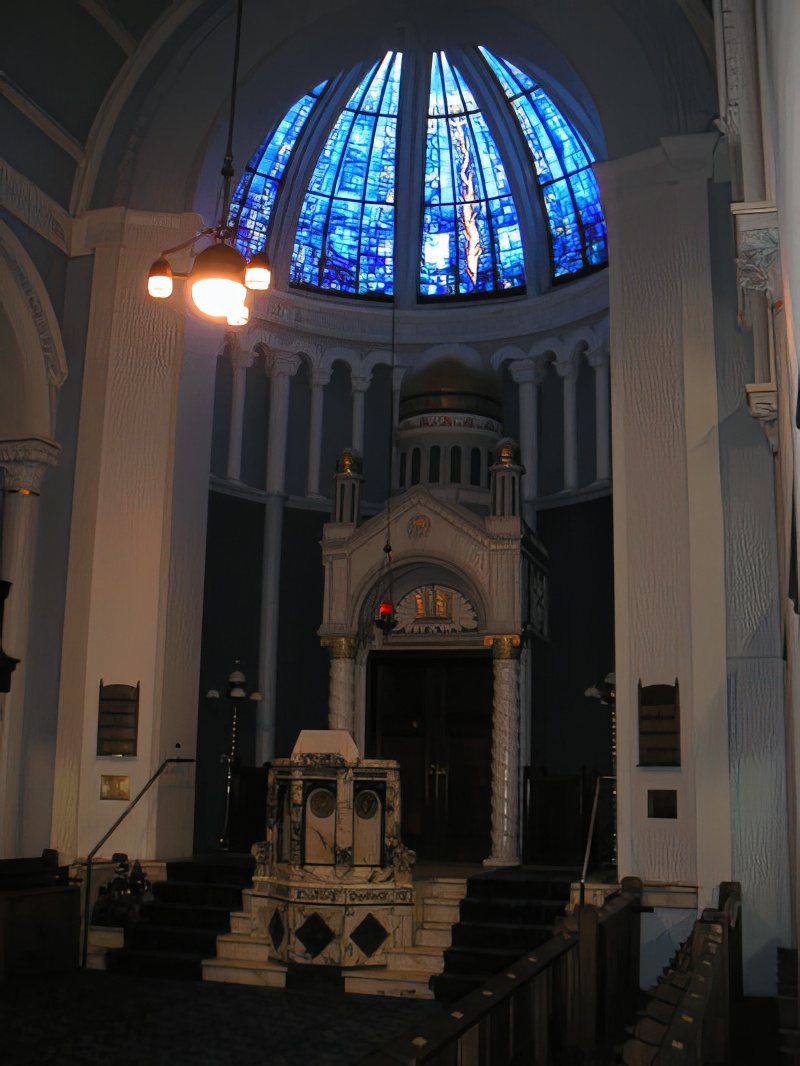
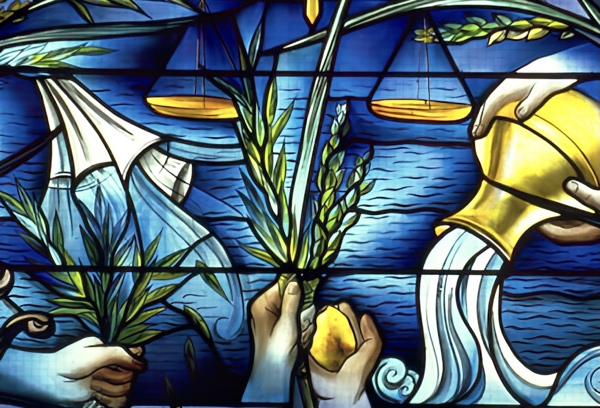
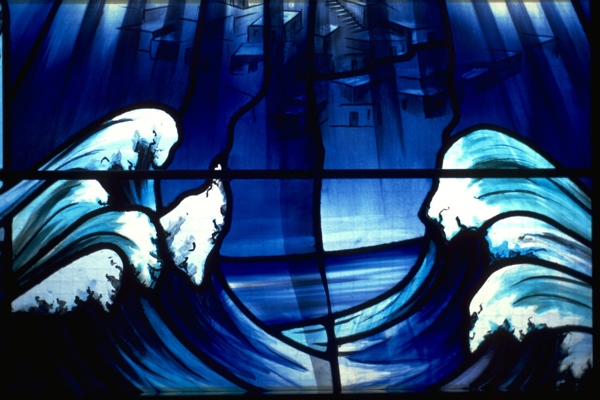
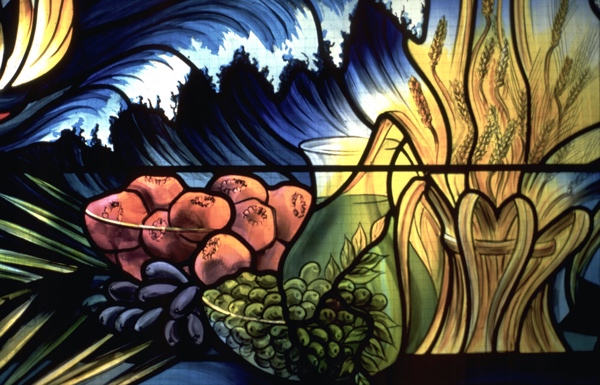
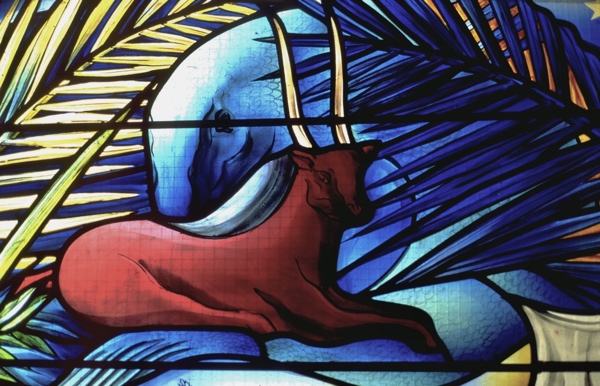
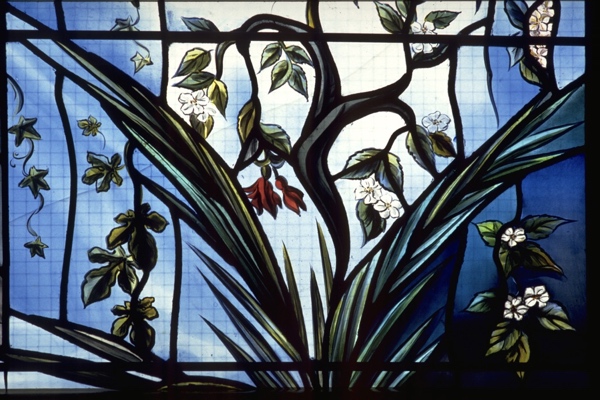
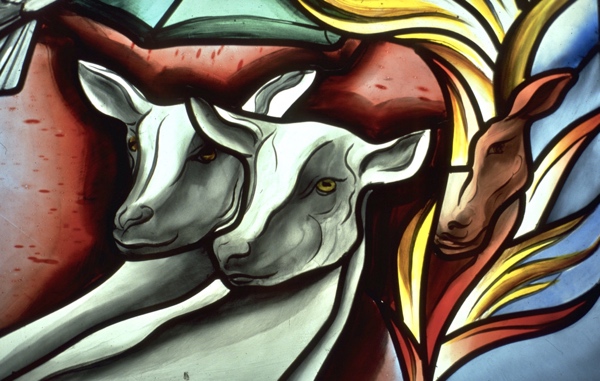
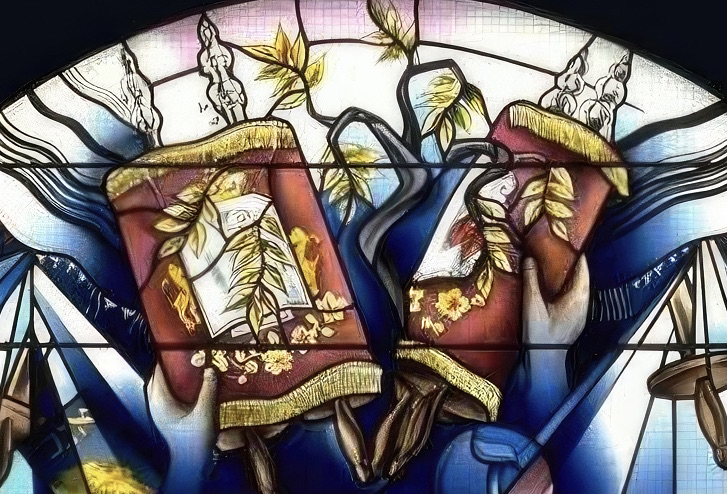
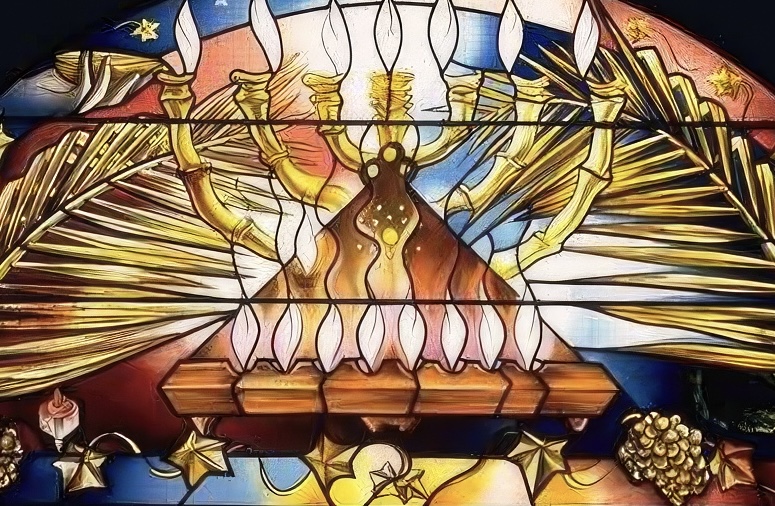
The Queens Park Synagogue Project This was an amazing project that I was commissioned to make in the early 1990's. The windows, apart from the Dome, half dome, are on the theme of the Jewish Festivals. This was the most incredible project to make. The first set, Rosh Hoshanah and Yom Kippur, Pesach and Shavuos were all made in my Glasgow Studio. The rest of the windows beginning with the Sabbath through Sukkot, Simchat Torah, Chanukah, Rosh Chodesh and the rest of the minor festivals were made at the Derix Studio in Germany. Recently, I made a small film showing the windows and the dismantling and removal of these windows from Queens Park Synagogue. This was filmed for the television quality of the time. I was in Glasgow in 2017 and filmed the windows in their new location. I hope to create a film about the windows in the new location. There is also a historical documentary that could be made about the project.
In the early 1990s, I was commissioned to design and create a series of stained glass windows for Queens' Park Synagogue in Glasgow. What began as a fundraising initiative to save a historic but deteriorating building evolved into a major artistic project linked to Glasgow’s year as European City of Culture 1990.
The project consists of 22 windows celebrating the Jewish Festivals, plus a spectacular central dome inspired by Jewish Mysticism.
Material: Lamberts Glass (mostly flashed)
Technique: Extensive etching, painting and silver staining
Dimensions (typical window): 3m × 0.7m
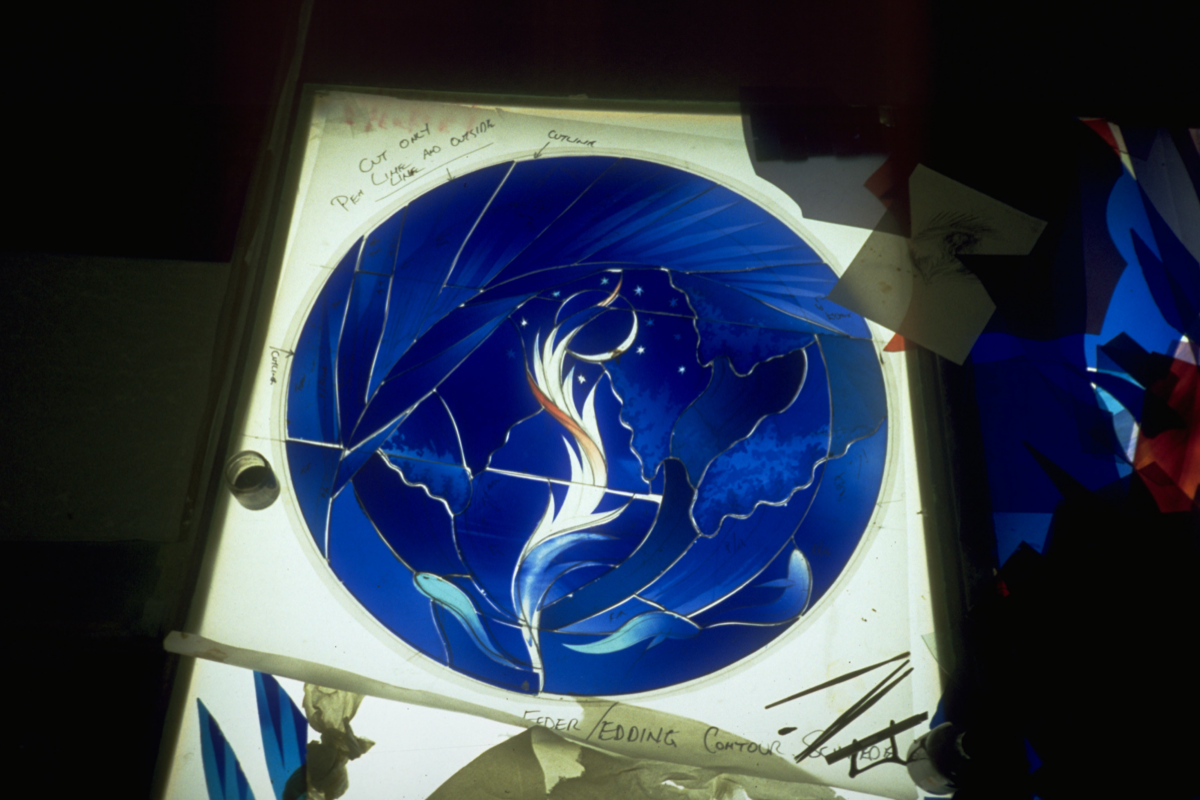
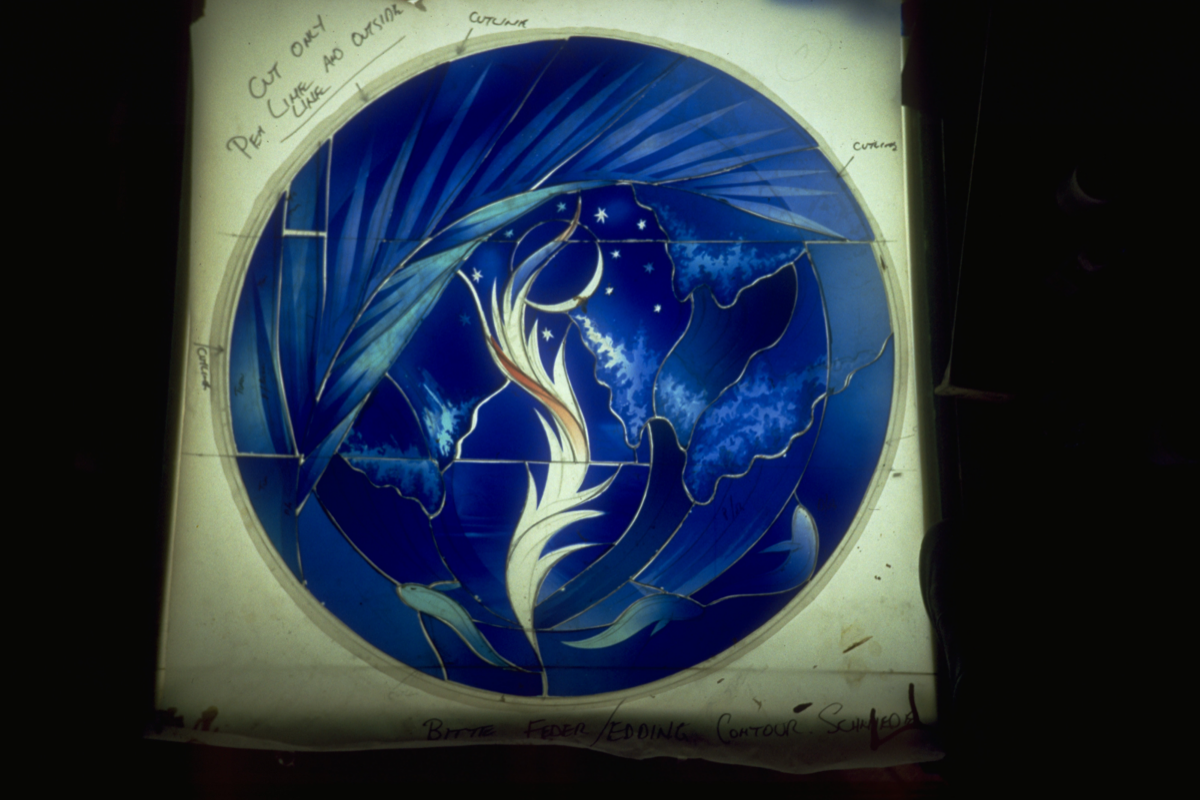
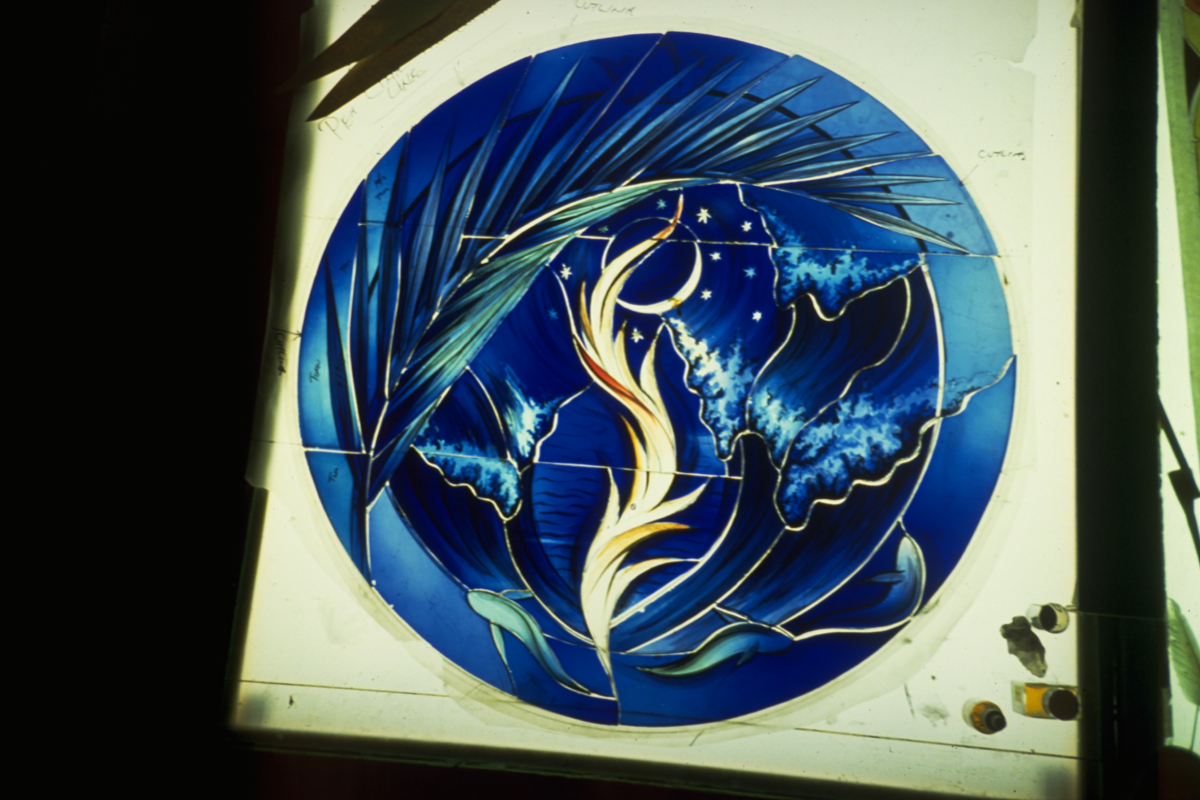
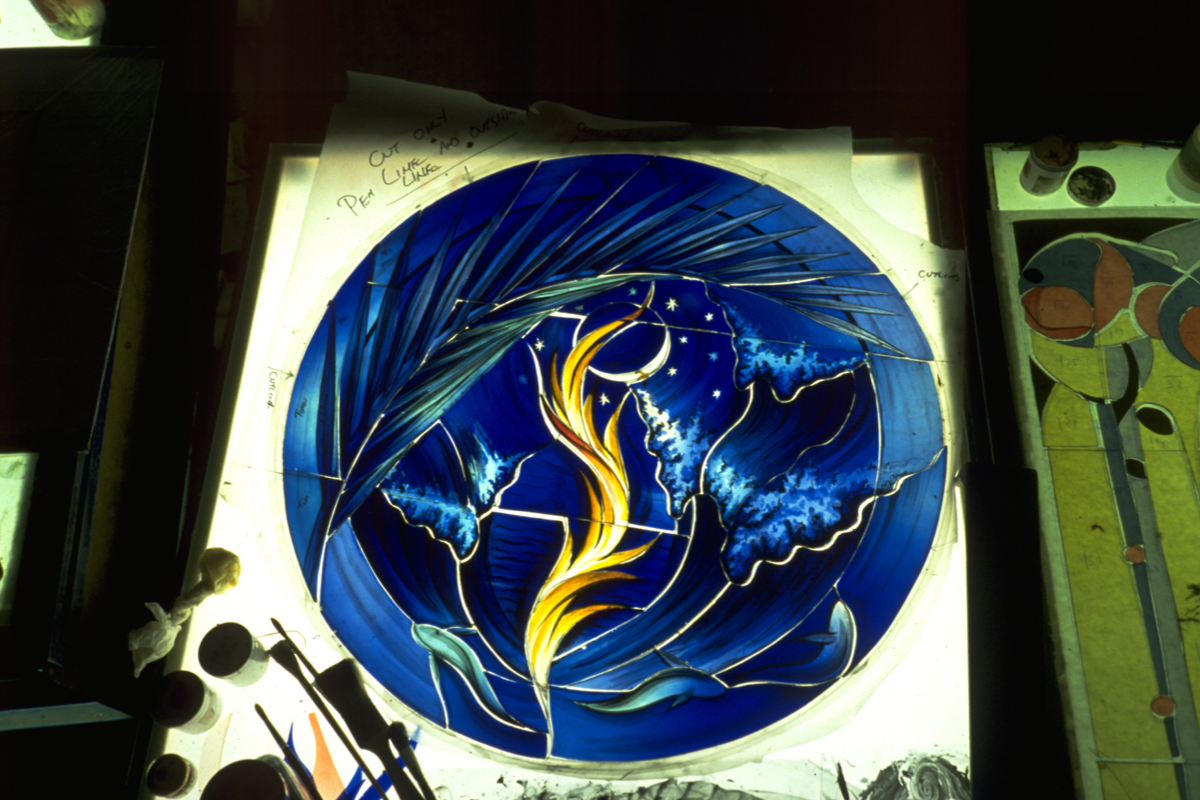
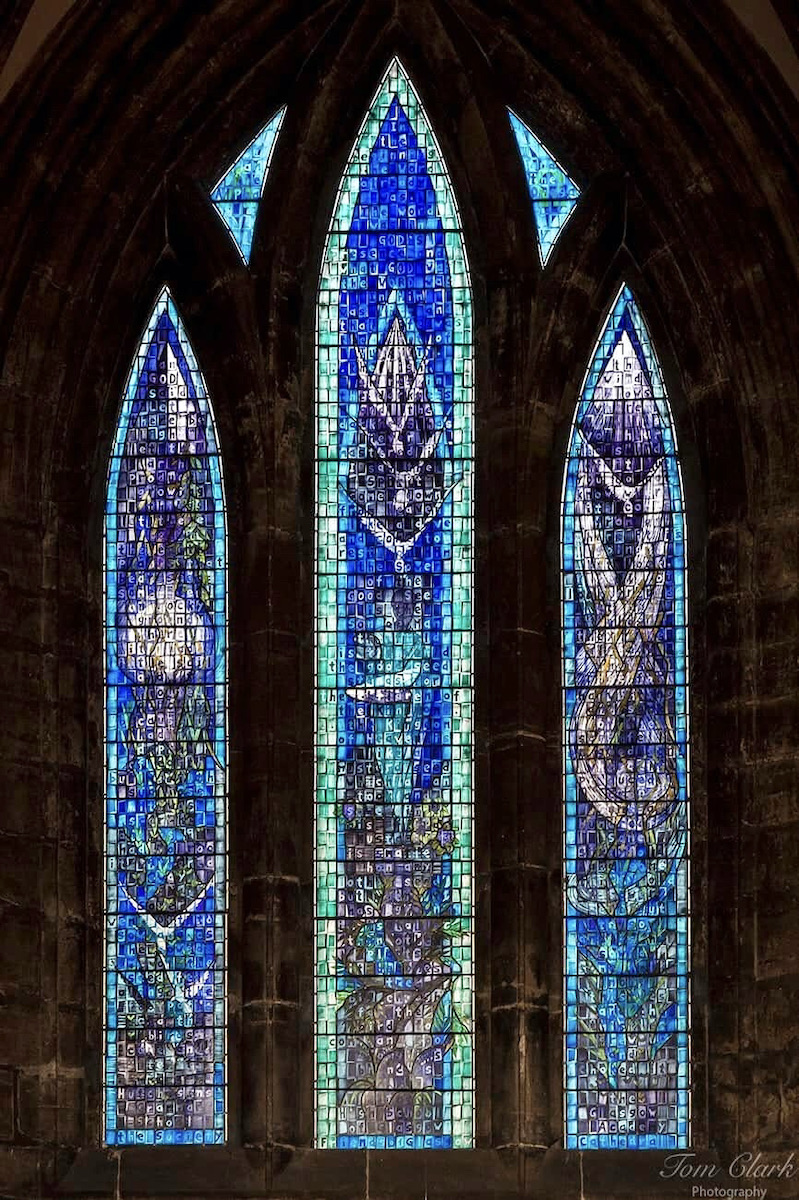
In the beginning was the Word.
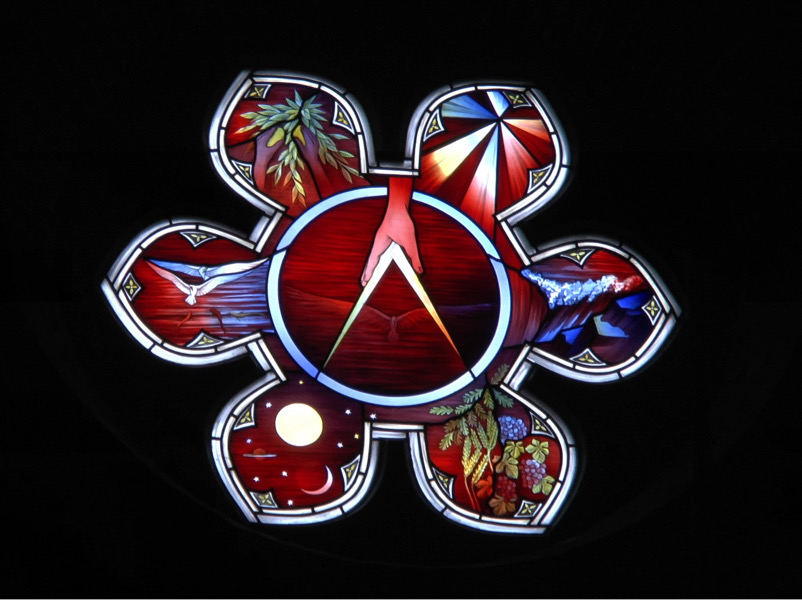
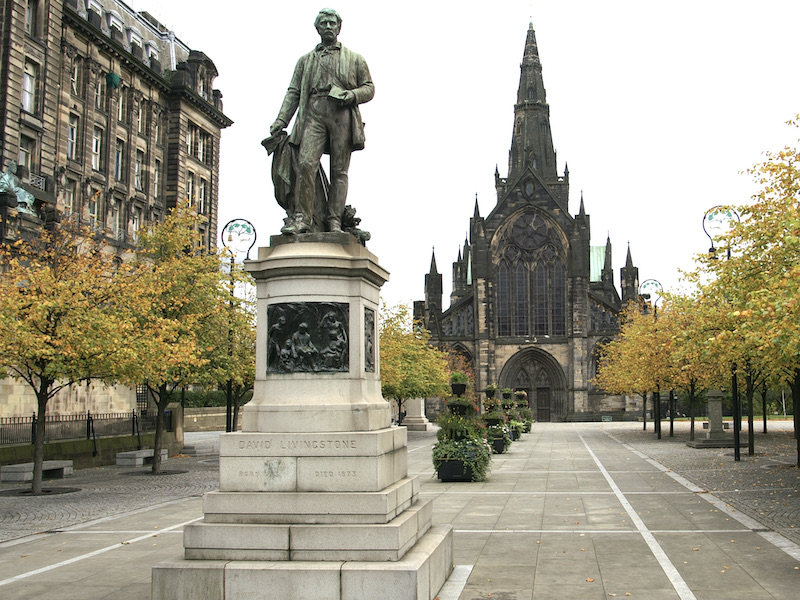
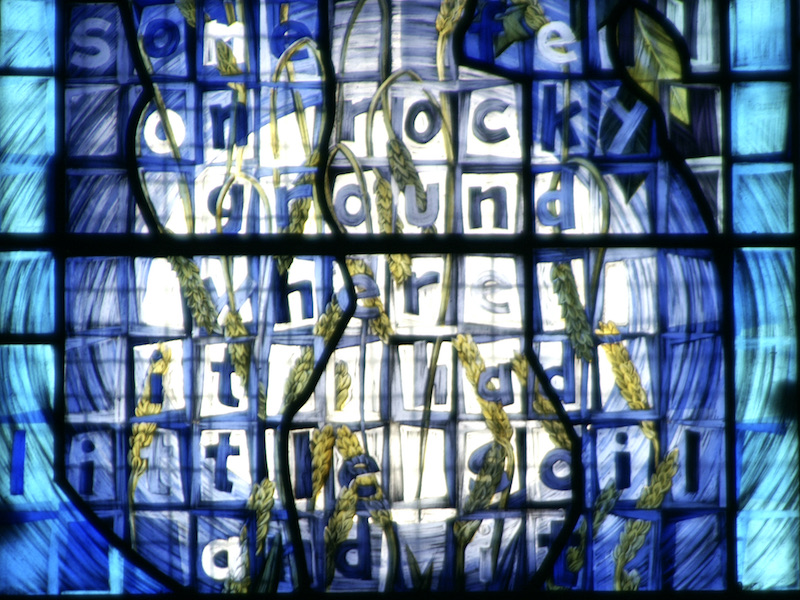
The commission was for a Millennium window — a work marking the observed birth of Christ, installed in Scotland's oldest cathedral. The brief was clear on one point above all: it should be modern, of its time, and distinct from everything else in the building. No figures with swords. No angels in the medieval tradition. Something new.
The response was to go back to the beginning. Not to the imagery of the Church, but to its foundation — the Word itself. The Gospel of John opens not with a birth or a miracle but with a statement of pure theology: the Word already was. That became the starting point. If this window was to mark the Millennium — two thousand years of Christianity — then its subject should be what Christianity is built on. Not its iconography. Its text.
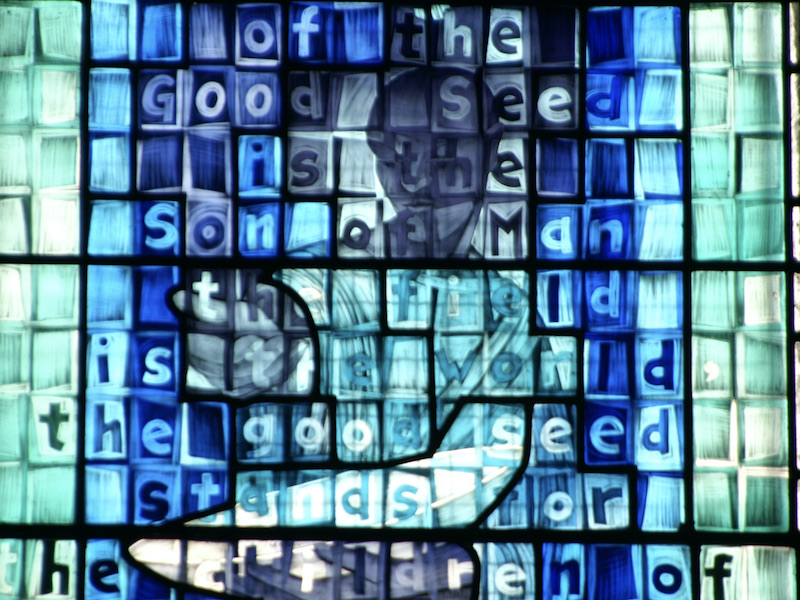
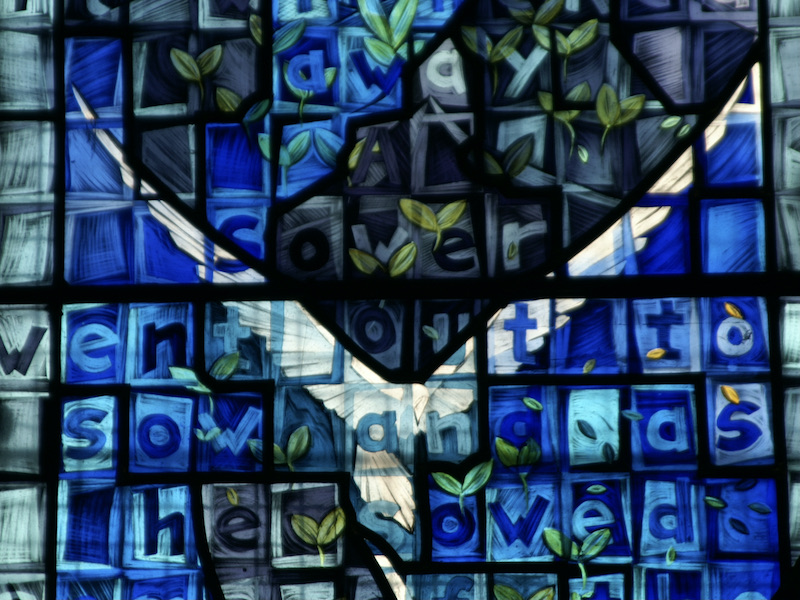
Across three lancets, Biblical quotations run through the entire surface of the glass. The Parable of the Sower. The Parable of the Mustard Seed. The opening of John's Gospel. Each word is symbolised in the same area of the glass it inhabits — the dove, the wheat, the vine, the seedling — so that text and image counterpoint each other simultaneously, the way a musical line is answered by harmony. The viewer can read the glass or feel it. Both are true at once.
The window is also a Trinity window — its three lancets structurally resolved to express equal proportion, its upper registers marking the three representations of light in the Creed.
The work was not without its critics at the time. A quarter of a century later it stands as a work that could not have been made any other way, by any other hand, at any other moment.
Commissioned by The Glasgow Academy, Hutchesons' Grammar School, and The High School of Glasgow, with the Friends of Glasgow Cathedral and Historic Scotland. Installed 1999.
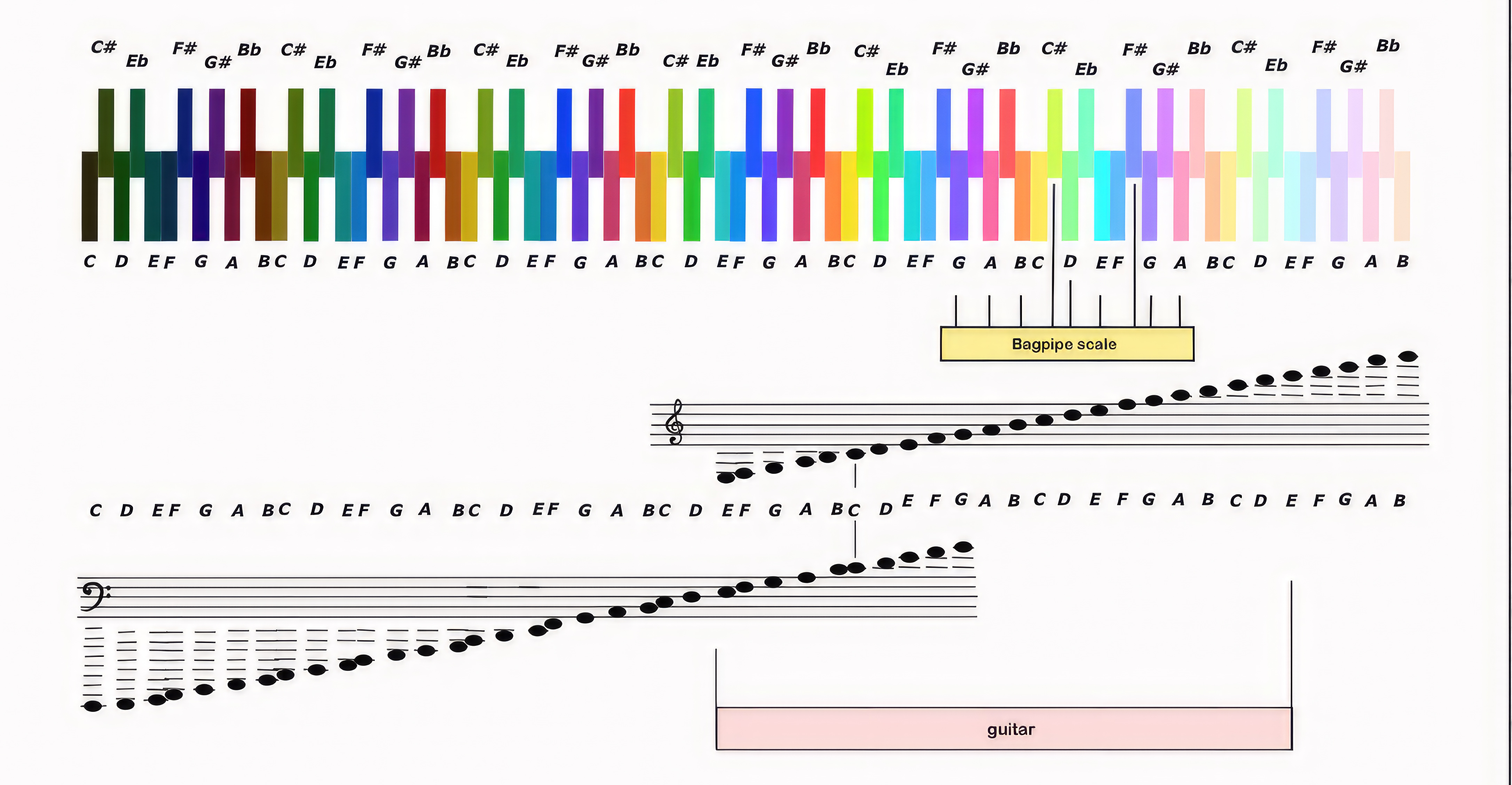
This is a concept that I developed when I was looking for a useable link between music and colour. I had an idea that it would be interesting to see what music would look like flattened out as an image.
In the case of bagpipe music as the sound is continuous, I decided that the music should be illustrated as strips of colour. Once I had developed the system, one of the first pieces I transposed was"the Flowers of the Forest" a very famous bagpipe tune. I was astonished at the pattern and structure that was involved.
I began transposing notation that I could play so was looking at guitar music which I can play and started creating the images. I found it then and still find this quite fascinating.
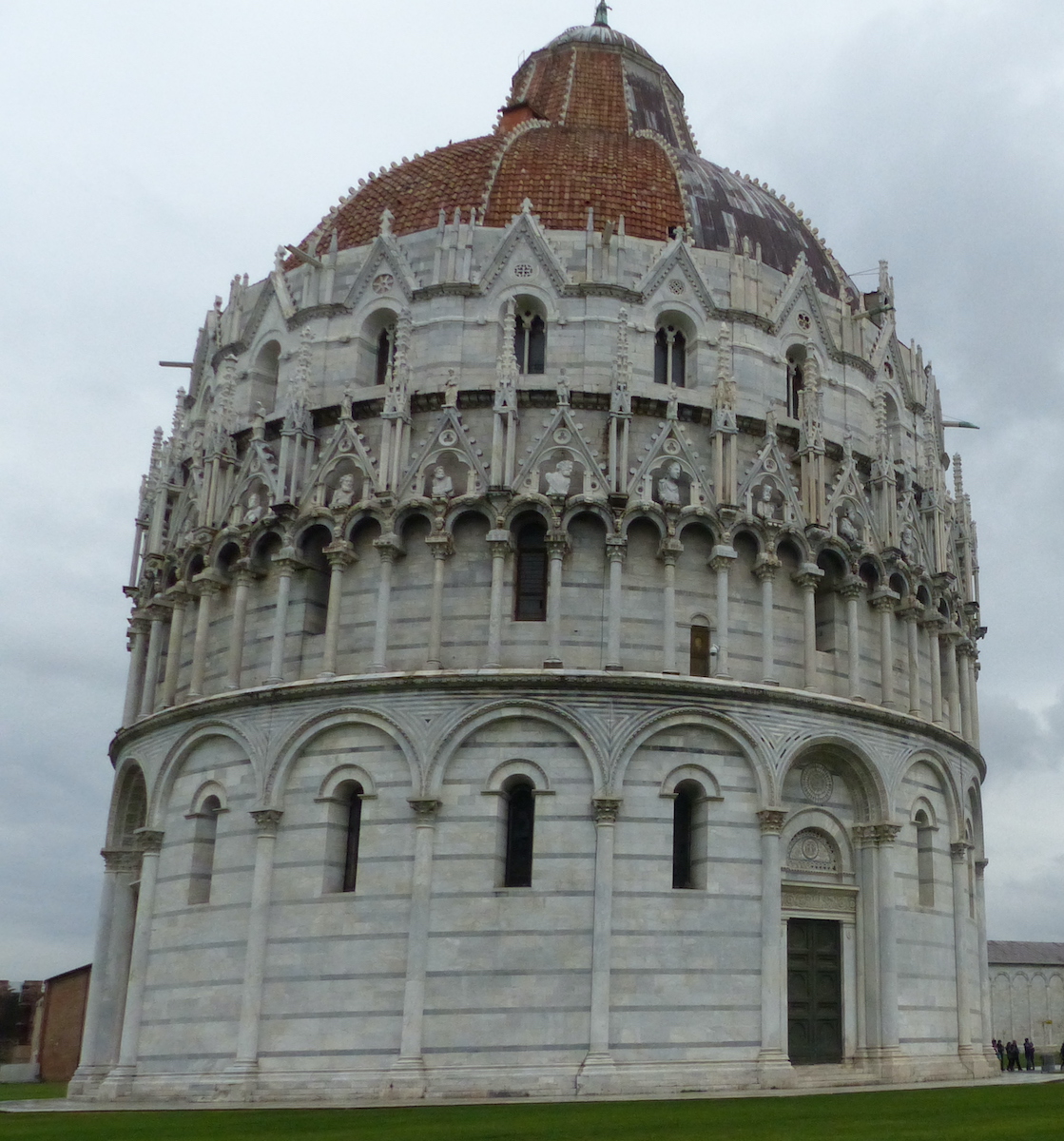
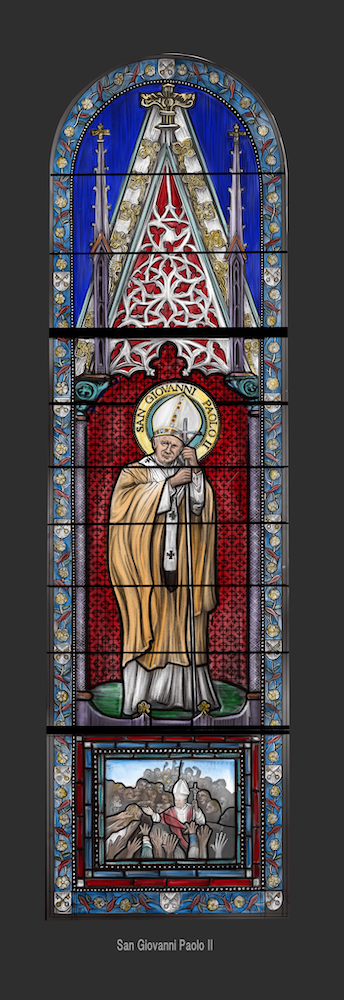
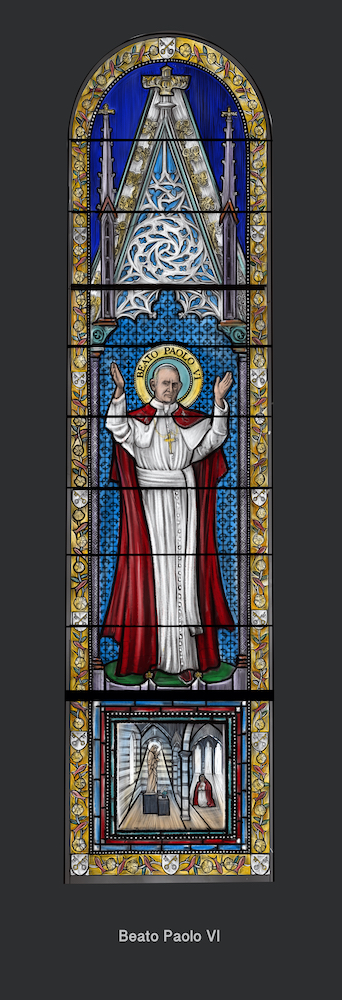
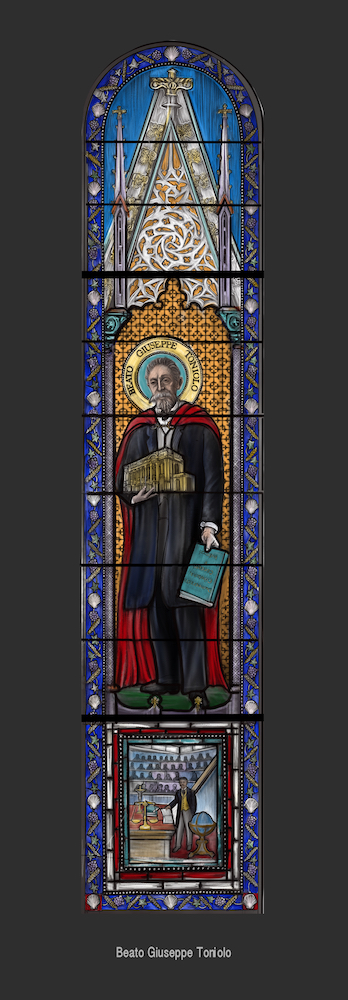
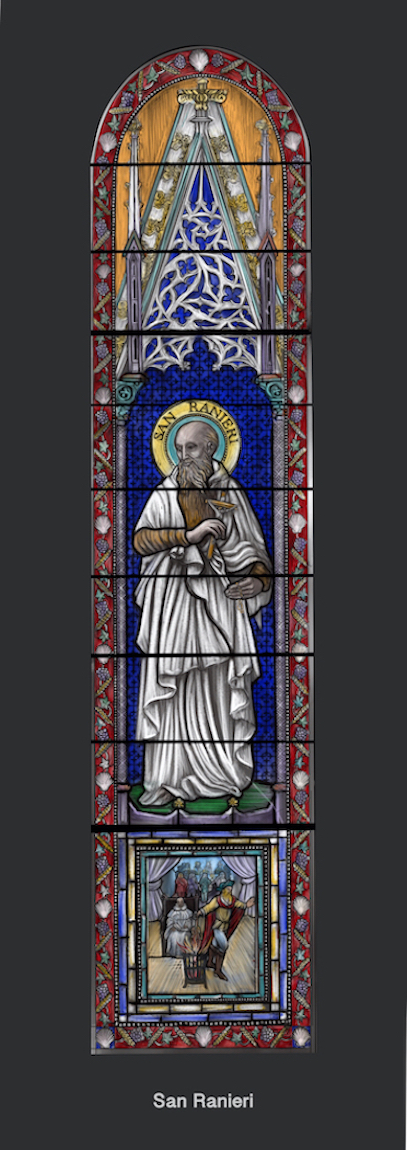
An invited international competition for four missing windows in the Baptistry of Pisa — one of the most significant medieval religious buildings in Italy, standing beside the Leaning Tower on a UNESCO World Heritage site. In association with Derix Glasstudios, I was selected for the second phase and produced four complete designs in the full Gothic Revival tradition — mouth-blown glass, hand painting, silver stain, traditional leading.
Each window carries a narrative panel at its base and one of two purpose-designed border programmes rooted in Papal and saintly iconography. The commission ultimately went elsewhere — but the designs stand as a complete, competition-grade body of work in a tradition that runs parallel to everything else in the practice.

Two small circular windows for a former synagogue near Heidelberg, unused since the Second World War, marking the completion of its restoration and its new life as a concert and gathering space.
Hidden in the West window is a Star of David — not drawn, but cut. Fixed with silicone rather than lead, the cut line itself stays white and luminous, fading in and out of visibility with the light. Present, and not quite there. Like a memory.


he main projects I am working on presently I can't discuss or show at the moment. But these small projects were interesting in their own way. All Three shown here are fused works using Bullseye Glass
These are some pieces I made last year.
Two small windows for a friend of mineIn the case of bagpipe music as the sound is continuous, I decided that the music should be illustrated as strips of colour. Once I had developed the system, one of the first pieces I transposed was"the Flowers of the Forest" a very famous bagpipe tune. I was astonished at the pattern and structure that was involved.
I began transposing notation that I could play so was looking at guitar music which I can play and started creating the images. I found it then and still find this quite fascinating.
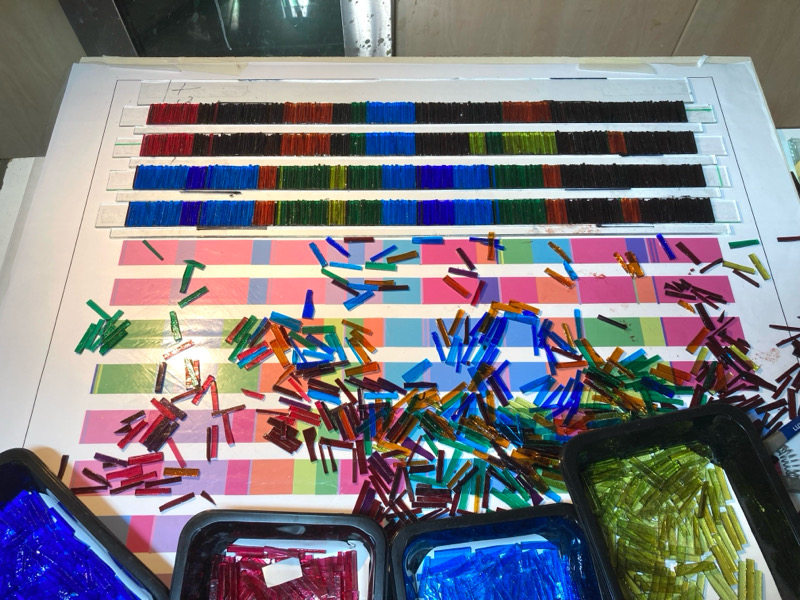
I made two bagpipe tunes for the Piping Centre in Glasgow. this shows the tiny strips of colour being placed on the design.
They are two new tunes and are dedicated to the main founders of the Piping Centre. one is written by Finlay McDonald, the other, I composed with Finlays' help. although they are on the premises they have not yet been installed.
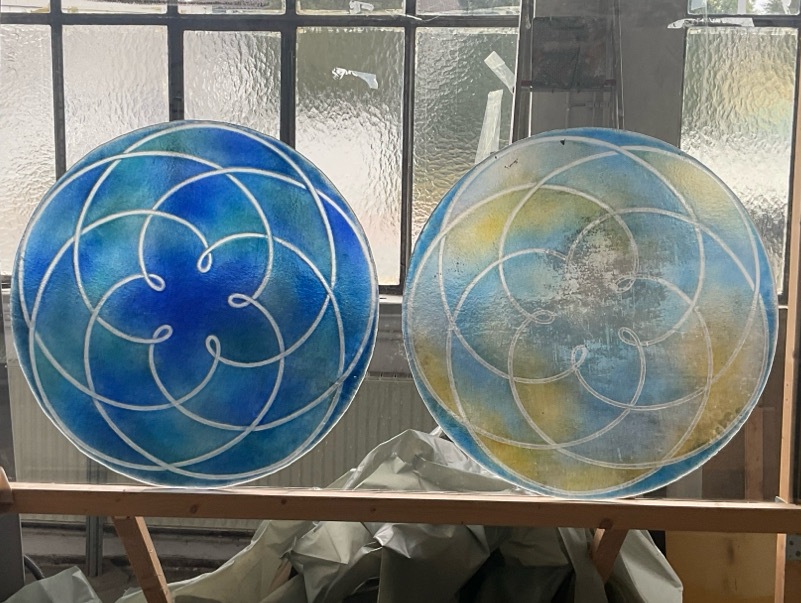
Commissioned by a bagpiper friend of mine, these two Bullseye Glass panels show the passage of Venus around the sun.
it was an intriguing project to make. firstly I had the white areas cut using water jet cutting, the first time I have done this, the pieces were two small and some too complicated to cut by hand. these were fused onto the panel and then the colour was added and all fused again.
r View Project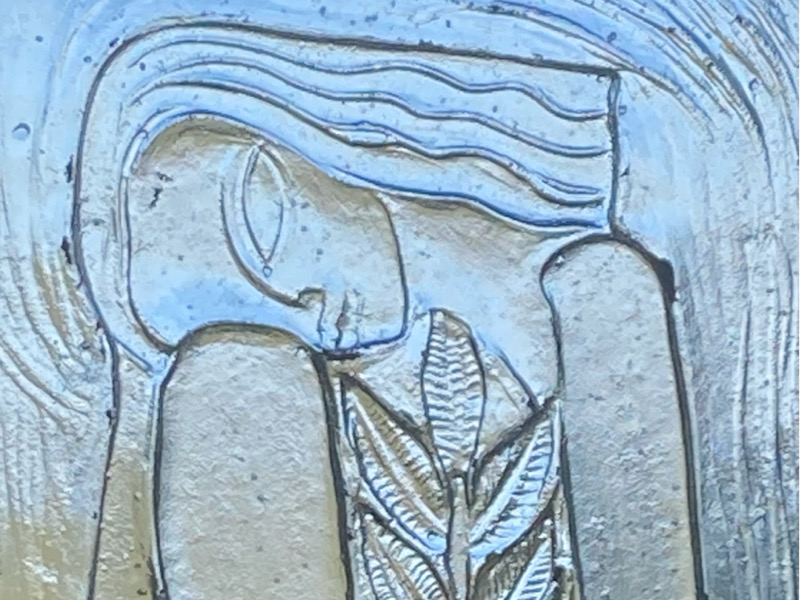
i saw a small, well it looks small, brass sculpture on X one day. it may be the work of Eric Gill, I haven't been able to verify this. I really liked it so decided to make a version of it as a glass relief sculpture. i carved it into a slab of plaster. then cast it to get a negative mould, cast a positive in that and then created the investment mould. the glass used again was Bullseye.
View Project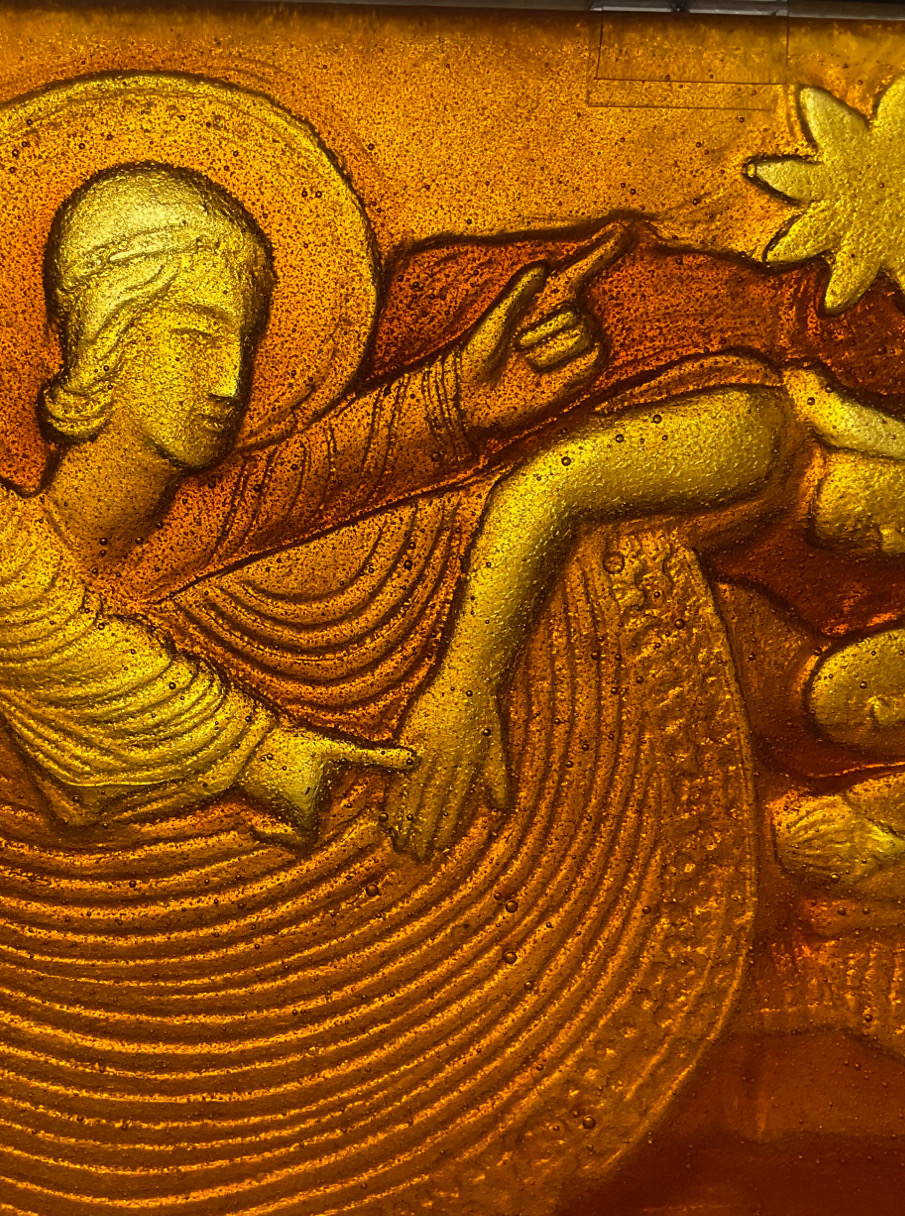
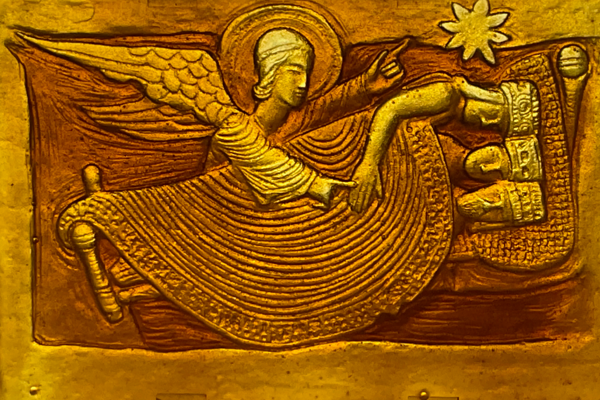
This small panel, but heavy, is based on a beautiful stone relief sculpture, a very famous one from the Cathedral in Autun, France. I have always loved this image since I first saw the sculpture. I always wanted to do something with it in Glass.
The opportunity came when I was invited by Bullseye Glass to spend time in the Northlands Studio in Caithness, sadly since closed down. I had taken a sample to make from my recently completed Glenmorangie window to make. Michael Bullen, the studio leader, asked me if I would like to try casting. Although I worked with relief sculpture, I had never cast and made repeatable moulds. This was actually the defining moment for my work for around the next 8 years.
I made this piece as a clay, we cast it, made a positive and negative version and then made them using Bullseye frit. What I learned in those few weeks was the basis for the glass work that we used for the Cathedral in Kericho and some of the ongoing work we do in the Nakshi Glass Studio in Kenya.
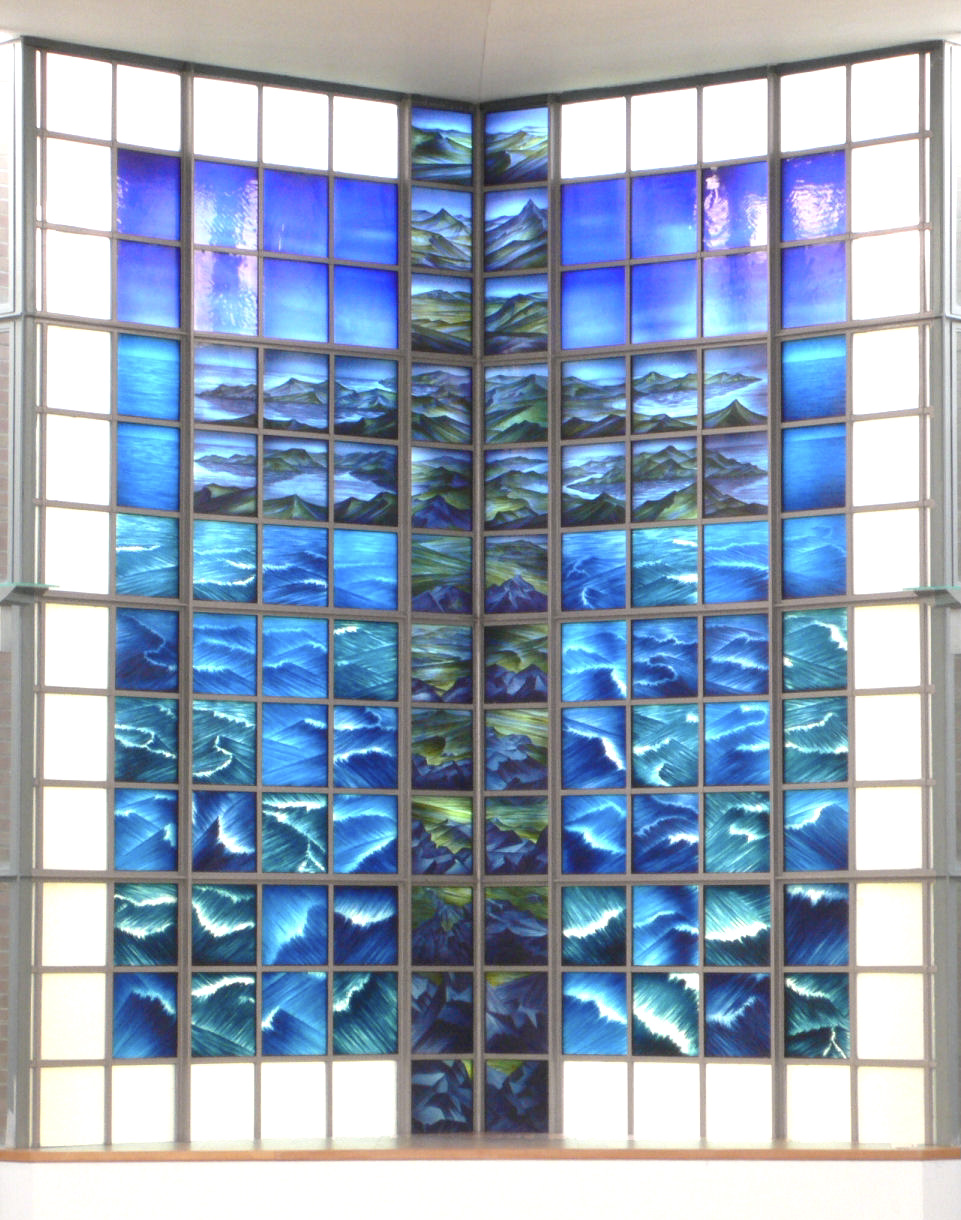
A memorial, not a reminder. Won by open competition and dedicated in Pangbourne College Chapel, this window traces the 8,000-mile journey of the Task Force to the South Atlantic and back. The design moves through three elements of nature, each carrying its own weight: the sea, ancient and unfathomable, holding the memory of that long crossing; the sky above, speaking of transcendence and order; the rock and earth of the islands themselves, standing for permanence and endurance. At the centre, where these elements meet, a quiet cross emerges from the landscape rather than being imposed on it — a symbol of sacrifice woven into sea, sky and stone.
View the full project →“His window captures this experience, one that perhaps only those involved in the actual conflict would know. He shared it with all.”Andrew Moor
“This window alone would seem to me to give cause to salute the coming to maturity of a Scottish artist of real stature.”Cordelia Oliver
“His range is breathtaking, with projects scattered around the world from Dumbarton and Kilmacolm via Glasgow Cathedral to Germany, Dubai, Shanghai and Kenya.”Clare Henry
“It is not positioned as art within the space. It is the space.”Laura Schreffler
“He was never morbidly curious or intrusive, wanting only to understand our experiences and to use them to create arresting and powerful images.”John McCarthy
"The vivid, haunting shifting of color and light."The vivid, haunting shifting of color and light... is a showstopper of an experience for guests."Brian Freedman,
Interested in commissioning a custom stained glass piece or discussing a restoration project? Get in touch to schedule a consultation.
Contact John